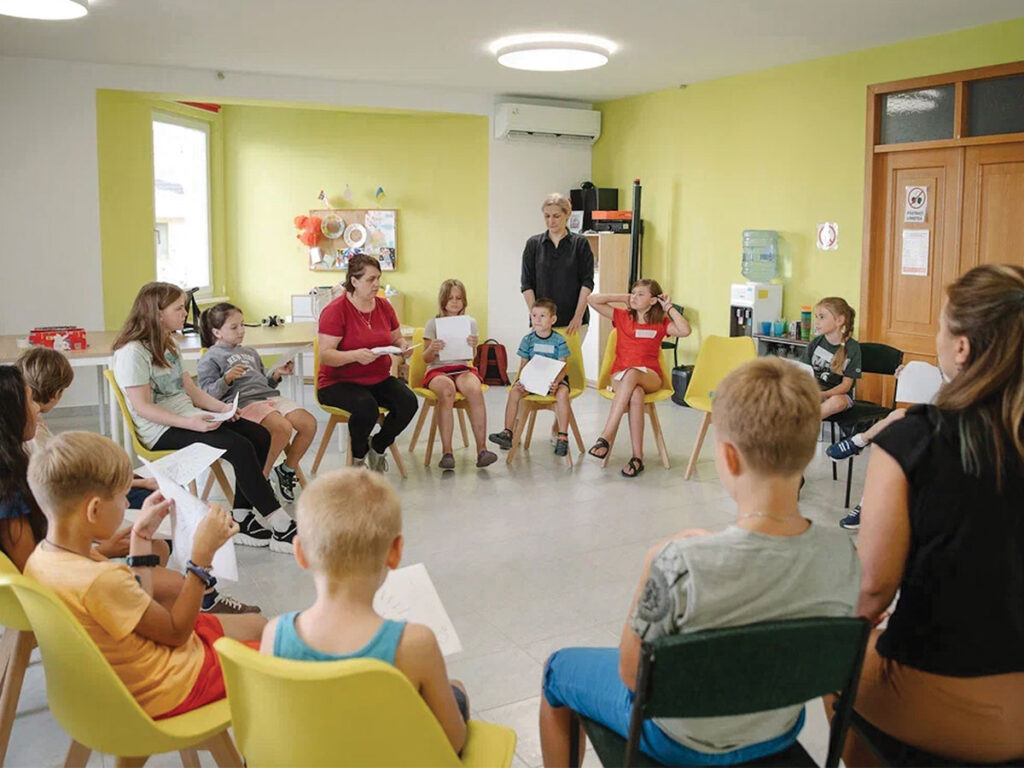
When it became clear that the millions of refugees who had fled Ukraine in the first weeks of the crisis in 2022 would not be returning anytime soon, relief organizations in the surrounding countries had to adapt. They turned their efforts from first response—offering food, shelter, and basic medical supplies—to developing long-term integration and resettlement programs. Instead of providing for daily needs alone, they began helping refugees find work or school options and attending to the psychological wounds of the traumatized. This is an ongoing and massive task, requiring sizable resources. The United States Conference of Catholic Bishops (USCCB), through the work of its Church in Central and Eastern Europe program, has accompanied several organizations with such projects by providing financial support. Rather than viewing this aid as merely a monetary transaction, we consider it a privileged opportunity to see more clearly and learn from the expertise of those who
This content is exclusive to members.
Login for access
Join the PEAK Community
Start with Individual Membership, complimentary to all grantmaking professionals. You'll unlock access to insights like this one, along with member-exclusive tools and resources, our CONNECT community, and more.
Meet the Author
Jennifer Healy
Director for Aid to the Church in Central and Eastern Europe, United States Conference of Catholic Bishops
Principles for Peak Grantmaking
Read more insights related to this Principle:
Learn, Share, Evolve