Harnessing Power and Pleasure to Navigate Philanthropy as Black Women

Yanique Redwood, PhD, in 2023 published White Women Cry and Call Me Angry, a collection of 18 essays about her experiences with racism in the workplace that encourages others to share their own stories and create communities that help people heal from past traumas. The PEAK Black Caucus earlier this year read the book as a group as Redwood’s experiences in philanthropy mirrored those of many caucus members. But she is also someone who embodies resilience and power, even as she recovers from discrimination and racism in the sector. The caucus’ collective learning journey culminated at PEAK2024 with Redwood leading a pivotal discussion on race in philanthropy and offered insights and strategies for navigating the complexities of predominantly white spaces.
Central to Redwood’s message is the transformative power of pleasure as a liberatory practice. By embracing a life of joy and connection, we can create new forms of agency. In her own daily practice, Redwood decenters work and other aspects of racial capitalism, prioritizes self nourishment, and finds solace in nature, somatic practice, and personal reflection. Looking at our peers and colleagues in the sector, we see them struggling with balancing pleasure and work. They’re burned out. What will we have to give up to prioritize pleasure and imagine new relationships with ourselves and with philanthropy? What kind of healing, pleasure, and collective action do we want to create together?
To reflect on these questions and the book club experience, we sat with Redwood to explore the motivations behind her groundbreaking book, her vision for the future, and initiatives to create healing spaces for Black women impacted by workplace racism, underscoring the importance of prioritizing healing, rest, and pleasure as pathways to power. Edited highlights of our conversation follow.
ーPEAK Black Caucus Cochairs Edberte Beauzile, Consultant, and PEAK Black Caucus Cochair Corey Murphy
You’ve written this text which has fostered and galvanized conversations on Black women’s experiences of racism at work. What is next for you?
I am working on two exciting projects. The first is a film adaptation of White Women Cry. It is envisioned as a 45-minute documentary that can be used as a political education and organizing tool. I am working with DC-based filmmaker Mignotate Kebede (What Happened 2 Chocolate City?), who has a powerful vision for the film. The second is infrastructure for Black women who are organizing around this issue of workplace racism. Central to this infrastructure is healing spaces for Black women to recover from the harm they have experienced. I recently hosted two funder briefings and am hopeful that I can raise the resources to make these two projects a reality. I also plan to take a break this summer. I want to learn how to cook vegetables! I will also be reflecting on everything I have learned since White Women Cry launched so I can be thoughtful about my next steps.
For others who may be facing similar challenges in philanthropy, or in other sectors, what advice would you offer to those people as they navigate white spaces while trying to make a living?
First, read Audre Lorde’s “Uses of the Erotic: The Erotic as Power” every day for a month. Lorde describes the erotic as “a well of replenishing and provocative force to the woman who does not fear its revelation, nor succumb to the belief that sensation is enough”ーa lens that encourages introspection and deep feeling of a wide range of emotions. And by extension, read my essay “A Pleasure Virgin Discovers the Antidote to Whiteness.” Second, cultivate your daily pleasure practice. Read Pleasure Activism by Adrienne Maree Brown. Answer this question every day: What can I experience today that feels good? Third, read Rest is Resistance by Tricia Hershey and develop your rest practice. Fourth, explore authors like Resmaa Menakem and begin or deepen your somatic practice. I know this advice may not feel satisfactory, but I believe that when we are fully rested and we know what it feels like to be fully resourced and in touch with our body’s signals, then we will move in new, more powerful ways.
I had tried so many different approaches over the years to navigate white spaces and nothing worked. That’s because what I was experiencing was never about me. It was about whiteness, white supremacy, and racism. It was about power over me. Prioritizing my own healing, rest, and pleasure allowed me to take back my power and make decisions to keep me safe, whole, and joyful. This is what I wish for all of us. But it will look different for everyone. There are no easy answers, but I am in complete agreement with Audre Lorde when she says, “Our erotic knowledge empowers us, becomes a lens through which we scrutinize all aspects of our existence, forcing us to evaluate those aspects honestly in terms of their relative meaning within our lives. And this is a grave responsibility, projected from within each of us, not to settle for the convenient, the shoddy, the conventionally expected, nor the merely safe.”
What impact did you hope to make with your book? Do you feel like that impact has occurred?
I had hoped that my story could be a witness. That it could say to Black women, “I see you.” The impact has exceeded my expectations. The depth of impact is undeniable. When someone says, “Your book helped me see that it’s not me” or “I don’t feel so alone anymore,” I know I have done my job. And those messages from Black women and other women of color have been coming in since the day I published White Women Cry and have not let up.
You were the guest speaker at PEAK 2024 Black Caucus’s session where you put a great emphasis on power mapping as an essential tool for Blacks in philanthropy. What is power mapping and how can we leverage it in our field?
Power mapping is the process of naming a specific change objective and then identifying those who have power to help you achieve that objective. A power map can inform antiracism strategies by helping you answer questions like: Who is with me/us and has power to influence others? Who will oppose my/our plan and has power? Who is with me/us and doesn’t have power but could be organized to exert new sources of power? I believe we need to start seeing ourselves as organizers and not just employees. One is active. The other is passive.
What are three pieces of advice you would give to anyone starting in philanthropy?
The first is to get educated about power. Read some Frantz Fanon. Some Paulo Freire. The second is to get clear on the power dynamics in philanthropy. Read Edgar Villanueva’s Decolonizing Wealth. Whichever foundation you work for, trace the source of its endowment. Who was hurt as that money was made? Read Cracks in the Foundation: Philanthropy’s Role in Reparations for Black People in the DMV, a report commissioned by iF, A Foundation for Radical Possibility for some guidance on how to do this analysis. Do your power map. Do it with a community of people who support you. Third, build an extensive network that can help you move on if you need to and build deep relationships with people who can hold you when it gets hard. Do not be naïve like I was. Philanthropy means love of humankind, but the sector has a long way to go to embody this love.
Meet the Author

Edberte Beauzile
Consultant

Corey Murphy
PEAK Black Caucus Cochair
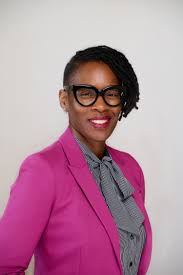
Yanique Redwood, PhD
Founder, Collective Work and author
Principles for Peak Grantmaking
Read more insights related to this Principle:
Drive Equity
Related Topics
Diversity, Equity & InclusionSelf-Care & Wellness
Related Articles
How the Rogers Family Foundation Partners Beyond the Grant
READ
How Centering Emergent Learning Can Hone Your Grantmaking and Deepen Partnerships
READ
Redefining the Grantmaker-Nonprofit Partnership
READ