Navigating the Complexities of Humanitarian Emergencies
Afghanistan. Gaza and Israel. Haiti. Sudan. Syria. Ukraine. The Mexico–United States border. Venezuela. These regions have one thing in common: complex humanitarian emergencies (CHEs) that are destroying lives and livelihoods, devastating communities and shattering societies.
Grantmakers are often unsure of how to respond when CHEs occur. Complicated social and political environments, uncertainties in outcomes, and real and perceived risks are examples of barriers that hinder donor involvement in addressing immediate, long-term, and often layered needs of communities in a state of emergency. However, grantmakers can navigate these challenges and make a positive impact by centering humanity to support on-the-ground efforts that save lives, improve quality of life, and boost outcomes amid CHEs.
The concept of a CHE encompasses a range of multifaceted events such as conflict, mass population movement, pandemic, or socioeconomic crisis. Sometimes they are a combination of different events, which may also expose affected populations to layered trauma from those events. These emergencies can be more challenging to identify, and they often evolve over time. Communities are made vulnerable by weakened institutions and environmental degradation and face multiple overlapping threats. Due to the multitude of causes, responding to a CHE requires a multidimensional approach and external assistance. These emergencies also expose deep-rooted power imbalances and socio-political divisions, necessitating a response that adheres to international law and humanitarian principles.
Upon its founding in 2010, the Center for Disaster Philanthropy (CDP) has focused on disasters stemming from severe weather events and natural hazards, while giving some attention to refugee situations. However, the organization’s shift towards addressing CHEs was influenced by various factors, including the expertise of new leadership with experience in international conflict crises and its declaration of civil unrest in the US as a CHE in 2020 after the murder of George Floyd. Furthermore, the intertwining of climate change, societal conflict, and COVID-19 at the global and local levels in recent years has prompted CDP to prioritize funding and attention towards multiple CHE contexts. From 2022 to May 2024, CDP has invested almost $27.9 million dollars in CHE settings through 89 grants.
CDP’s approach to addressing politically challenging and conflict-based contexts is centered on the four core humanitarian principles: humanity, impartiality, neutrality, and independence. These principles guide CDP’s work and are especially critical in addressing CHEs and guiding philanthropy. The organization upholds neutrality, or not taking sides in conflicts, and impartially provides assistance based on need.
While CDP may provide immediate, life-saving grants to partners responding to acute, life-threatening shocks, it mainly focuses on the period beyond the immediate crisis, prioritizing collaboration with local and national organizations that uphold humanitarian principles and are well-positioned for recovery. For instance, in response to the Gaza-Israel crisis, CDP established a fund underpinned by humanitarian principles to encourage donors to take a similar, principled approach in their giving, emphasizing the humanity of all affected and providing assistance proportionate to need.
Philanthropic funding for CHEs remains disproportionately low and only a small portion of funds is allocated to CHEs, as indicated by data from Candid’s report Measuring the State of Disaster Philanthropy. According to Candid’s data as of September 2023, of the $157.2 billion given by private and community foundations, corporations and public charities in the 2021 fiscal year, only 2 percent ($3 billion) went toward disasters and, of the $3 billion, only $34.3 million went to CHEs.
CDP is dedicated to bringing attention to, educating, and informing the philanthropic community about the most urgent humanitarian needs. This involves not only highlighting the world’s most prominent crises but also shining a light on lesser-known but equally devastating situations. CDP identifies and profiles CHEs around the world and, where appropriate, establishes specific CHE funds to facilitate contributions from donors. At the same time, fund managers engage in comprehensive analysis using publicly available sources, personal networks, and on-the-ground relationships to deeply understand the dynamics and trends of CHEs and to strategize how the funds entrusted to CDP can have the greatest impact on vulnerable communities. Emphasizing local engagement in grantmaking and supporting innovative initiatives demands time, empathy, and deep connections. CDP’s grantmaking process seeks to demonstrate that effective disaster preparedness, response and long-term recovery efforts can be implemented and can yield substantial results in CHE settings. CDP continues to build the evidence base and communicate the impact of its investments in CHEs.
CDP’s engagement in CHEs is made possible by a supportive financial operations and grant management team that aligns its expertise in risk management and effective grantmaking with the demands of working in challenging contexts and conducting due diligence on grantee partners, as well as finding ways to transfer funds locally responsibly to remote areas with limited banking systems.
A great example of CDP’s recent work in a CHE is in Ukraine, where the organization has collaborated with survivor and community-led response groups to address the ongoing crisis and supported integrated, flexible and multiyear programs to position Ukraine’s people for their country’s recovery.
Centering the humanity of individuals and households, utilizing available resources and tools, exercising patience, acknowledging that change is gradual but noticeable, while continually focusing on the humanitarian imperative, is crucial. CDP demonstrates that—though the challenges may seem immense and immovable—targeted recovery investments, focusing on root causes and equity, can have a measurable impact. We invite grantmakers to explore how they, too, can adopt a humanity-centered approach to addressing needs in CHE-affected communities.
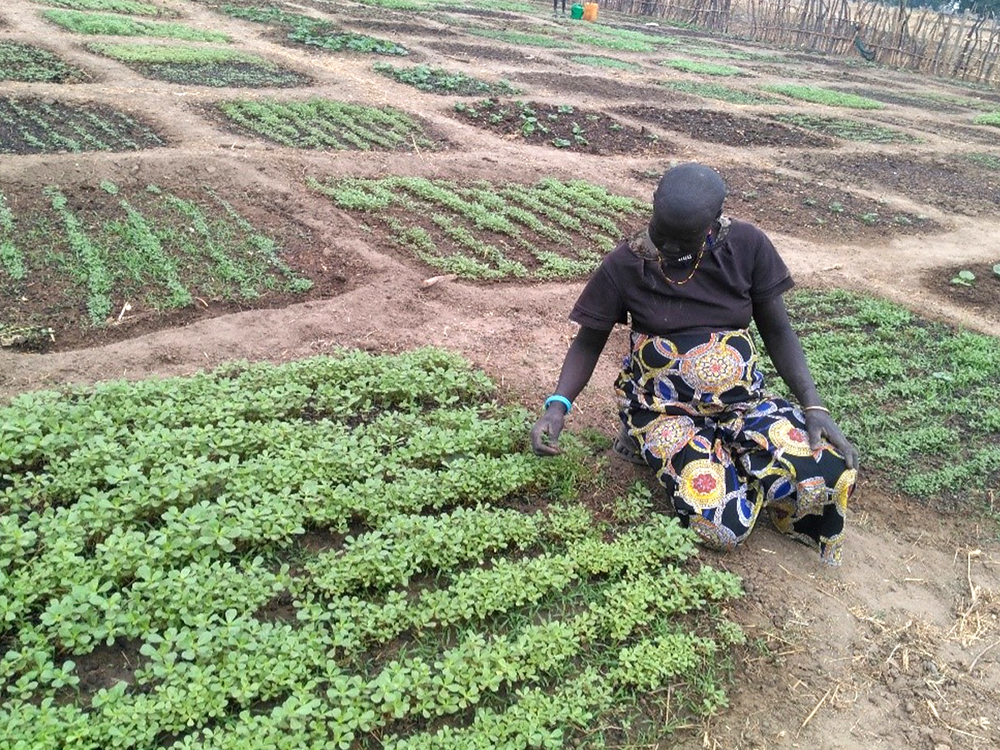
Photo: CDP’s support allowed Near East Foundation (NEF) to develop, deliver, test and optimize rapid livelihood restoration and diversification activities supporting flood-affected households in Sudan and South Sudan during the dry season. Read the story. (Photo courtesy of NEF)
Meet the Author

Sharad Aggarwal
Vice President of Fund Management and Coalition Building, Center for Disaster Philanthropy
Principles for Peak Grantmaking
Read more insights related to this Principle:
Steward Responsively
Related Topics
Partnerships & CollaborationRelated Articles
The Myth of Risk: Fear not the dragons, funders
READ
Prep Your Grantmaking Systems for Effective Crisis Responses
READ
Three Essential Ways to Provide Support for Community Rebuilding After Disasters
READ