Sponsored by GivingData
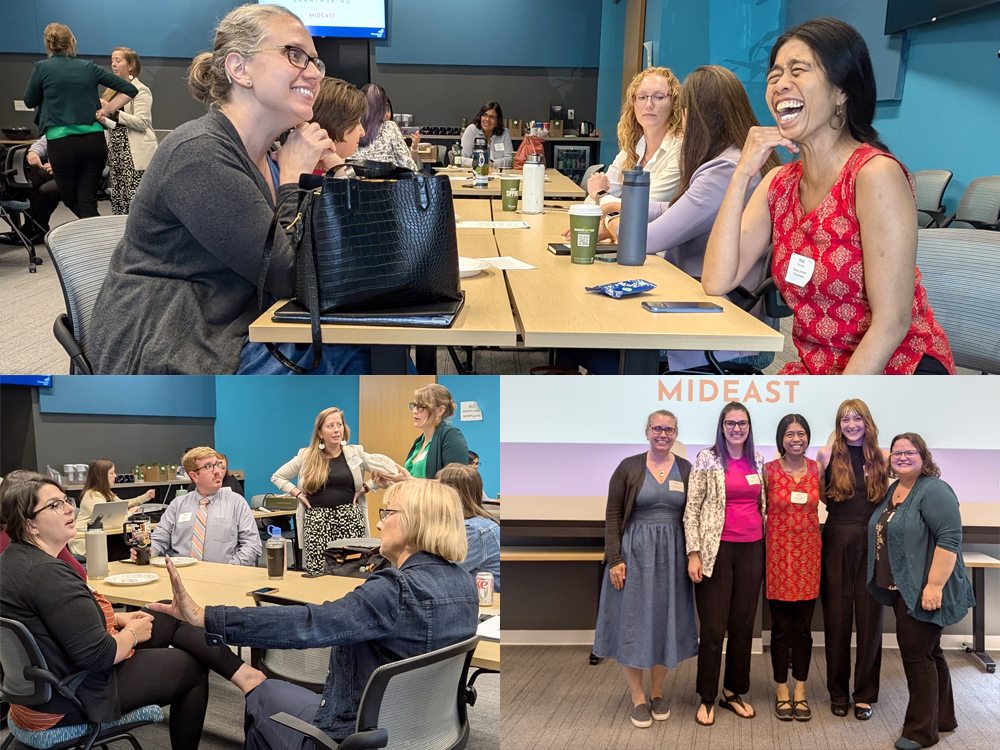
At a recent GivingData event in New York City, Roland Kennedy, Jr., director of grants management at Carnegie Corporation of New York, led an inspiring session on equity in practice. He made a compelling argument: “Grant management systems are the bridge to how foundations do business, not just how they make grants.” His insight resonated with us at GivingData because we strive to build technology that not only facilitates the grantmaking process, but also supports and fulfills the aspirations of the organizations we serve.
A grants management system (GMS) can be the bridge to achieving funders’ equity objectives in a structured and consistent way. How? A GMS enhances transparency, reduces barriers to funding, and provides real-time data that challenge bias, leading to better-informed decisions.
Through our work with grantmaking organizations, we’ve gained valuable insights into how a GMS helps move equitable principles from theory to practice. Here are five examples.
Streamlining access to funds
In GivingData’s recent publication Equitable Grantmaking in Practice, five funders identified removing structural barriers to funding and reducing grantee burden as key principles of equitable grantmaking. A great place for funders to start is by asking themselves if their application processes are optimized for equity.
Complex application and review processes often place unnecessary burden on the applicant. This can discourage grant applicants, especially smaller or newer nonprofits, from applying for funding. User-friendly grantee interfaces make it easier for grantees of all sizes to apply for funding.
There are a variety of barriers that can prevent grantees from applying for and accessing the funding essential to fulfilling their mission. Meeting organizations where they are and eliminating unnecessary administrative burden creates a more inclusive and accessible grantee experience, ensuring that deserving organizations are not deprived of funding opportunities due to overly complex application requirements.
Data-informed decision making
Many grantmakers recognize that a commitment to equity requires a disciplined analysis of who they fund, how they evaluate applications, and why certain organizations consistently receive or are denied grants. Many foundations are leveraging their GMS to aggregate and analyze the data they collect from their applicants to provide a more comprehensive overview of who they’re serving—or possibly overlooking.
For example, in Equitable Grantmaking in Practice, Northwest Health Foundation highlights how the foundation uses data in its GMS to track where its spending is—and sometimes isn’t—in alignment with its values. “The coding structure and tagging tools [within our GMS] allow us to do a quick and nimble, but still detailed, analysis of our grantmaking,” says Quinn MacNichol, Grants & Data Manager.
In 2023, GivingData partnered with Candid to launch an integration with Demographics via Candid, a resource that gives grantmakers access to demographic data from nonprofits. This empowers foundations to track the demographic profile of the organizations that apply for and receive funding. When grantmakers better understand the makeup of the organizations they fund, they can identify gaps and find opportunities for more inclusive support.
Increased transparency and accountability
Organizations seeking funding often invest valuable time in understanding the strategic priorities and decision-making processes of potential funders. Despite this, it is common for applicants to feel uncertain about why their grant applications are declined.
Despite this, it is common for applicants to feel uncertain about why their grant applications are declined. Here, grantee portals, such as those offered by GivingData, can improve collaboration and communication between funders and applicants. The ability to exchange comments on applications to provide further context, clarification, and feedback creates transparency, builds trust, and creates a more streamlined experience for everyone involved.
Further, by providing immediate and specific feedback on funding decisions, foundations add transparency around their decision making. Applicants gain insights they can leverage in future applications.
Better data integrity also makes it easy for grantmakers to publicly share information about funding decisions, including funding amounts, evaluation criteria, and grantee demographics.
“By sharing your foundation’s demographic data [on grantees], you are affirming your foundation’s commitment to transparency and sector advancement,” Morgan Family Foundation Grants and Operations Coordinator Stephanie Richards wrote in a recent blog post about bridging technology and equity. “Your foundation’s data can exemplify how you are advancing stated equity strategies and policies, and could encourage other funders to share their data by your example.”
Reducing implicit bias in grantmaking
Implicit bias can influence decision-making and lead to inequitable distribution of resources. Funding decisions might be unintentionally skewed toward well-established organizations, leaving smaller or newer organizations overlooked and underfunded.
A GMS reduces bias in grantmaking decisions by standardizing the application review process. Foundations can use their GMS to gain a comprehensive view of their funding and identify discrepancies across program areas.
By identifying that certain groups are consistently underrepresented in its grantmaking, foundations can distribute resources more equitably.
Support for long-term, trust-based relationships
Foundations are increasingly adopting a trust-based approach to philanthropy, which focuses on long-term relationships with grantees rather than rigid annual funding models. This method leverages multiyear, unrestricted grants to minimize the burdensome requirements that can overwhelm smaller organizations.
By automating progress tracking and data collection, a GMS reduces the burden of extensive reporting and allows both funders and grantees to focus their efforts on the work that drives meaningful impact.
Budget tools, such as GivingData’s scenario planning, give foundations a better line of sight on their future commitments and allow them to plan and deploy multi-year grants more easily. This is central to a trust-based philanthropy approach and allows grantees the flexibility to use funds whenever and wherever they are most needed.
Incorporating equity into grantmaking is not just an abstract goal—it’s an ongoing practice that requires attention, discipline, and infrastructure. A GMS plays a vital role in this transformation by streamlining processes, enhancing transparency, and giving funders the tools to make data-informed, equitable decisions. In our partnership with grantmakers, we are committed to providing technology that reflects and realizes their evolving aspirations. Together, we can build a future in which equitable grantmaking is not only possible—it is the standard.
To read more about how five grantmakers are putting principles of equitable grantmaking into practice, download our free eBook, Equitable Grantmaking in Practice.
Meet the Author

Liz Fischer
CEO, GivingData
Principles for Peak Grantmaking
Read more insights related to this Principle:
Drive Equity
Related Topics
Technology ManagementRelated Articles
From Fixing Forms to Fixing the System: A Call to Action
READ
How Technology Can Improve the Grantee Experience
READ
Driving Equity Through Technology, Transparency, and Data
READ