Intentional Relationships Require Courage: Five Undoings for Philanthropy’s New Year
In 2017, I was fundraising for a nonprofit organization in New York City when we received a major city grant. Years of advocacy, policy shifts, and organizing had finally pushed public dollars toward our shared vision.
Armed with that city investment, I got to work. I knew the public dollars were a signal, not a fully resourced solution. I started building a multi-lane fundraising initiative: approaching corporations, individual donors, regional foundations, and eventually national ones. Very quickly, patterns emerged.
Many funders wanted deep ownership over our programs before they would commit. Some had former policy or instructional backgrounds and—as a result of this proximity—quickly strayed from resource mobilization into strategization. One donor asked to join our programmatic design working group before deciding whether to contribute. And across all of these groups, another similarity: none had been willing to invest in our work before we had secured government funding.
Today, nearly two decades into fundraising, as a Vice President at Borealis Philanthropy, a funding intermediary, I am struck by how often our sector talks about being in partnership with our grantee partners without considering a more meaningful pursuit: being in intentional relationship—interacting in ways that honor our mutuality, interdependence, shared goals, and humanity.
I often hear from nonprofit leaders that what they want most isn’t donor proximity to their work, but clarity and understanding. Not more meetings, but fewer hoops. They want funders who trust them enough to let them lead, and who show up with curiosity rather than conditions.
To be in intentional relationship with our frontline partners is to do all this and more. It is to accept that difference is not dysfunction, and that alignment does not require sameness. It is to understand that our role is resourcing, not control; our responsibility is stewardship, not authorship. And it is to act with courage, funding what is emerging and untested, not waiting for that which has already been proven.
As we begin a new year together—one strife, as always, with promise and possibility—here are five mindsets and practices that I believe our sector must undo in order to build authentic, more trusting and loving relationships with our movement partners:
1. The myth that funding decisions require social proof.
From foundations to Donor-Advised Funds, philanthropists are so often moved by the same unspoken calculus: Who else is in? and How do we know it works? This tension between risk, proximity, control, and identity shows up everywhere in our field, shaping far more than investment decisions. In response to this anxiety, nonprofit and grassroots groups become hyper-responsive, overcorrecting in the process. They join coalitions to “legitimize” their work, extending themselves beyond capacity to amass donor support. They twist themselves in knots to produce impact numbers, diluting their programs in the process. As for us? We continue to algorithm our way to justice, treating every investment as if it must yield a predictable, measurable outcome before it even touches community.
Instead, we must: Recognize the unique ability—and essentiality—for philanthropy to support emergent, experimental, and untested work. Adopt a more principled stance of early investments as integral to stewardship.
2. Blurred lines.
A key and constant mistake that funders make is to still view ourselves as practitioners. It is this self-perception that results in our drifting into program design, sitting on coalition tables, or inserting ourselves into organizational decisionmaking. As funding decision makers, our presence alone can force nonprofits into appeasement mode, or task them with setting a delicate boundary. Our positional authority is a thing to contend with and make decisions around. Because when we do these things, we fail to recognize the power dynamics at play, and collapse consent—about involvement, boundaries, expectations. And without relational consent, funders may unintentionally pull organizations into shapes that serve philanthropy’s needs rather than community priorities.
Instead, we must: Refrain from steering and commit to resourcing. Self audit to ensure continual decentering, asking: Might my action or participation shift this organization’s decision making? Is this ask creating pressure to perform? Could our presence distort this space in some way? What undue expectations are we creating in what goes said or unsaid?
3. The assumption that more frequent engagement produces better relationships.
Both nonprofits and philanthropies fall into the trap of assuming that constant communication builds stronger relationships. In reality, it is the quality of our interactions that matters most. Some funders avoid meaningful dialogue altogether, making it impossible to build real relationships; others expect regular involvement, placing pressure on grantee partners to “show up” in ways that often overwrite their own capacity and boundaries. This dynamic shifts the focus from community needs towards personal preferences, turning nonprofit practitioners into caretakers of donor emotions in the process. And sometimes, donors do prefer distance. They want to give quietly, receive a report, and trust practitioners to lead without additional engagement. Honoring this preference is also part of being in intentional relationship. Real relationships are measured not by volume of interaction, but by clarity, trust, and respect for one another’s roles, preferences, and expertise.
Instead, we must: Start with a mutual question around relationship, asking: What level of relationship would you like, and do you consent to? Attend coalition tables, schedule phone calls, and send messages accordingly.
4. Our culture of fear.
Too big to fail, too early to fail, too public to fail. Metrics and logic models as shields. Strategy decks as risk management. Seed grants and dream grants housed in tightly controlled conditions. The quiet hope that if we carefully lay out and test our strategies, nobody will blame us when things don’t work. The truth? Philanthropy doesn’t fail because a single grant goes sideways, but rather because we refuse to learn out loud; to embrace the process—and failure—as essential to our work. Social change requires risk, experimentation, and courage. If we borrowed even a fraction of the investor mindset (and no, I am not advocating for venture philanthropy), we’d remember an essential truth: most investments fail, but the few that hit carry the whole portfolio. Some of our most important movements were built not on certainty, but on early, risky relational funding. And in fact, progress often literally requires failure. Still philanthropy keeps trying to fund justice without recognizing it, in many ways, as the need to fund possibility and uncertainty. And because this fear breeds impossible expectations, our partners don’t feel comfortable taking the risks required to win, or even expressing to us what is or isn’t working.
Instead, we must: Normalize experimentation. Recognize that all information is important information. Locate joy and learning in failure.
5. Projecting transactional expectations onto relational work.
As a result of longstanding philanthropic practices, nonprofits are often forced to prioritize keeping donors happy—producing metrics, reporting on activities, and meeting administrative demands at the expense of the deeper relational arc their work requires. This overload makes it nearly impossible to maintain genuine, sustained relationships, because we invite our partners not to practice relationship, but to perform it. And over time, our partners internalize donor needs so deeply that they lose sight of their own boundaries; a distortion that ultimately erodes the very trust and authenticity that true relational work depends on.
Instead, we must: Recognize that healthy, productive relationships are co-authored. Build them—and the expectations they contain, through shared agreements—together. Set boundaries together. Do and revisit the work together. What would it look like, for example, to revisit grant agreement letters based on mutual needs and visions?
Philanthropy loves to claim it is catalytic.
But to be a catalyst of anything, you must be willing to be first, early, uncertain; to move before validation arrives.
You must be willing to fund with hope—not fear—as a primary emotion.
And you must understand that communities already know what they need; and thus, philanthropy’s role is to move resources, not control outcomes.
When I think back to that campaign in 2017, I realize that the work itself wasn’t the challenge—it was navigating the relationships around it. What my organization needed then remains what our partners need now: funders courageous enough to trust, take risks, and build authentic relationships within their roles.
As we move through what we can know will be another unprecedented year, we must remember that intentional relationship is not simply a practice but a discipline. It is a way of showing up that consciously chooses courage over control, clarity over comfort, and partnership over performance. What would it look like to treat our relationships not as deliverables, but as mission-critical infrastructure? To acknowledge that our success requires us to cease dominating, directing, or hiding behind metrics as moral armor? What would it look like to invest like we could not—will not—fail? Only by approaching these questions with courage and humility and allowing their answers to shape our practice will we become the catalytic partners we aspire to be.
Sadé Dozan is a philanthropic advisor, culturist, and movement ecosystem architect whose work sits at the intersection of wealth, care, culture, and power. She serves as Vice President of Advancement at Borealis Philanthropy, leading organization-wide fundraising and communications strategy during a period of profound sector transition. She is also the Founder of Melanate., a movement infrastructure initiative cultivating leadership, narrative power, and resource fluency among Black women and gender-expansive people working in wealth and philanthropy.
As a culturist, Sadé examines how stories, symbols, and social norms shape who is believed, resourced, and protected. Her writing and analysis have been featured in Inside Philanthropy, The Chronicle of Philanthropy, and convenings across the field. Grounded in Sankofa and community-rooted wisdom, her work blends personal narrative, data-driven insight, and systemic critique to illuminate how resources move—and fail to move—through our democracy. She advises funders, collaboratives, and grassroots leaders on strategy, narrative design, and the cultural conditions necessary for justice movements to thrive.
Meet the Author
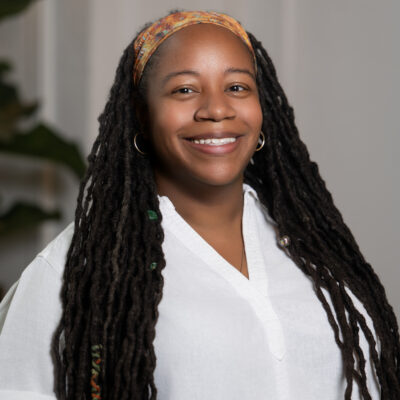
Sadé Dozan
Vice President of Advancement, Borealis Philanthropy
Principles for Peak Grantmaking
Read more insights related to this Principle:
Learn, Share, Evolve
Related Topics
Diversity, Equity & InclusionPartnerships & Collaboration
Related Articles
Reimagining Philanthropy Through Shared Power: Thrive's Community Grantmaker Initiative
READ
To Achieve the Change We Need, We Must Embrace the Full Potential of Philanthropic Capital
READ
How Shattering Siloes Led to More Trusting, Equitable Grantmaking
READ