To Achieve the Change We Need, We Must Embrace the Full Potential of Philanthropic Capital

When I was twenty, in the cramped bedroom of my grandmother’s house, my father shared with me that he was considering suicide. With mounting gambling debts, he felt he would be worth more dead than alive. That harrowing, formative experience indelibly shaped my long-term relationship with money.
At the time of this confession, I was a Harvard student, regularly called into the Dean’s office because my tuition payments were late. Yet, outside the Dean’s office, I was living, working, and playing alongside the next generation of the world’s most financially elite. These profound, early experiences with both scarcity and abundance highlight a core challenge for our sector.
Many of the most brilliant movement and philanthropic leaders carry complicated personal histories with wealth and poverty. This can unintentionally lead us to undersell the true cost and financial infrastructure required for the societal change we are committed to creating.
To build a better, more resilient society for our children, we must collectively overcome this pervasive hesitation—this institutional ambivalence—about asking for and holding significant, sustained capital.
Consider the world of political fundraising. During the 2024 election cycle, Kamala Harris emerged as a powerful force, raising $1 billion and continuing to solicit donations in the days following the election. Similarly, President-elect Trump sent texts multiple times a day to sell me an Elon Musk-style MAGA hat.
Even those seeking the most powerful office in the land are constantly and unapologetically asking for money. This kind of transparent, constant invitation for investment is the standard we must meet today to achieve our goals.
For grantmakers, fundraisers, and leaders alike, a clear, unified stance on capital is essential. We should all be able to answer with a definitive Yes to these critical questions:
- Do we want to raise a lot of money to propel our mission forward? Yes.
- Should our organizations pursue endowments and healthy reserves for stability? Yes.
- Should donors be invited to invest in both specific programs and the overall organizational infrastructure? Yes.
- Should we make really big, visionary asks? Yes.
- Should we ask our constituents and community members to give, affirming their ownership? Yes.
- Can we hold significant financial power and still fundamentally critique the capitalistic systems from which it derives? Absolutely, Yes.
In my role as a movement-accountable intermediary fund leader, I dedicate significant time to discussing finances with grantees, movement leaders, donor advisors, and donors. Throughout my career, I’ve led teams that have raised $134 million to support grassroots advocacy. What I’ve learned is simple: There is plenty of money to be raised; we just need to align ourselves to go out and get it.
I often hear the common organizational maxim: “Power is organized people and organized money.” This is usually followed by a version of, “we don’t have money, but we have people.” I respectfully challenge this framing. People in communities do have money, assets, retirement funds, savings accounts, and investments. Every strategic conversation we have with our community could end with an invitation to invest.
The current funding dynamic creates unsustainable instability. Endowed foundations often pay out only a paltry 5% of their endowments each year. Meanwhile, intermediary funds and nonprofits are scrambling to secure support in precarious one-to-two-year increments.
Compare this to the corporate sector. Companies like Boeing Corporation secure 80-year contracts with the U.S. government—meaning my seven-year-old granddaughter, Leyla, will be 87 years old when one of those contracts expires. Yet, philanthropy provides short-term funding and often takes “breaks” for strategic refreshes.
This instability has a clear human cost. A recent report, Pushed into Leadership, Hung out to Dry, highlighted that a significant portion of BIPOC respondents were not interested in becoming an Executive Director/CEO of a nonprofit, citing the unsustainable demands of the role. No wonder fewer visionary leaders are willing to lead values-driven organizations when the financial ground is constantly shifting.
My job as an executive leader is to offer a compelling, clear invitation to others to invest in the change I’m trying to create. Their job is simply to accept or decline. Most times, they’ll decline. Sometimes they’ll accept. To me, a no simply means ‘not now’ or ‘not this project.’
Thankfully, in that small bedroom and in the subsequent years, my family was able to help my Dad see how much more valuable he was to us alive and well.
Similarly, we must ensure our movement for change is seen as vital and valuable; not just in its mission, but in its need for sustained financial health. Until we move past our sector’s historic ambivalence about money, the movement for deep, systemic change—the movement that captivates the hearts, souls, and wallets of vast swaths of everyday people—will continue to elude us.
It’s time to fully embrace financial abundance as a prerequisite for enduring justice.
Meet the Author
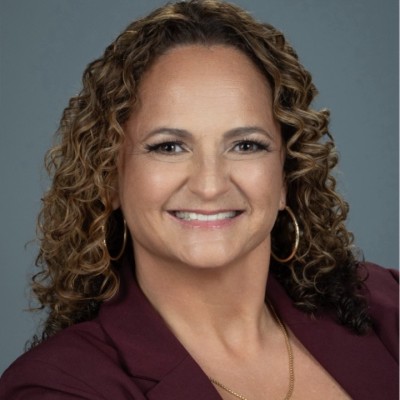
Denise Padín Collazo
Executive Director, Fund to Build Grassroots Power
Principles for Peak Grantmaking
Read more insights related to this Principle:
Learn, Share, Evolve
Related Topics
Partnerships & CollaborationRelated Articles
Reimagining Philanthropy Through Shared Power: Thrive's Community Grantmaker Initiative
READ
Intentional Relationships Require Courage: Five Undoings for Philanthropy’s New Year
READ
How Shattering Siloes Led to More Trusting, Equitable Grantmaking
READ