Journal | Issue 21
Grantmaking Lifecycle
The Journey From Transactional to Transformational Relationships
Since joining philanthropy as a program officer, I have heard the drumbeat signaling the need to move from transactional to transformational practices—including the call for foundations to be more transparent, more engaged with the needs of organizations and the communities they serve, and more willing to share power. But I wrestled with how I could implement more equitable practices in my work. I studied resources focused on equitable grantmaking, trust-based philanthropy, participatory grantmaking, and every other framework available. And then, I had a revelation: It’s all about relationships.
One definition of relationship is the way in which two or more concepts, objects, or people are connected; it is also the state of being connected. To me, foundations aim to make a difference in the lives and well-being of others and to create safe spaces where families and communities thrive. We cannot achieve this, much less transform the sector, without relationships with nonprofits and community members. So how can we build processes that value relationships over transactions? How can we center humanity in a field that demands tangible results?
Create a trust-based process
Coming into philanthropy at the POISE Foundation five years ago, the grantmaking process was traditional. Organizations completed a letter of inquiry or intent (LOI) as a first step. The LOI would determine whether an organization was invited to submit a full proposal. Upon invitation, a full proposal was submitted and evaluated. After the evaluation, award and declination letters were sent along with grant agreements, followed by payments. This was a basic process with no time to engage with nonprofits, do a site visit, or even give feedback. Applying what I had learned about trust-based philanthropy, I was able to move our grantee interactions from a place of compliance and control to a place of trust and collaboration.
At the time, as one person leading discretionary grantmaking at a small foundation, shifting our process was a challenge. There was extra work involved because, as the program officer, I had to build in time and opportunities to engage with applicants. In becoming a trust-based funder, I learned to lean into what we could do and not what we could not do. I had to challenge myself to be comfortable with discomfort to move towards transformational practices.
Due to financial constraints, it was not possible for us to provide multiyear general operating support. Instead, I was able to implement elements of trust-based philanthropy by reconstructing our process and timeline. For example, I eliminated the LOI and met with each applicant, which was one element that I could control. I streamlined our application process by not asking for unnecessary information while building time for office hours into the grant lifecycle. I launched applicant information sessions about our process and criteria to build transparency. I embedded continuous feedback loops and advisory committees to get input on our process and to shine a light on our weak areas, especially where it came to supporting Black-led and Black-serving nonprofits. These process shifts fostered deeper relationships with not only applicants and grantees, but also community members.
These grantee relationships were critical during the COVID-19 pandemic. POISE leadership needed to decide how to leverage its funds to support the Black community, and larger foundations were looking to us as a resource to understand the needs of Black-led and Black-serving nonprofits. Because of the strong relationships we developed before the pandemic, POISE was able to quickly learn what forms of support were needed most. This
information led to the creation of the Critical Community Needs Fund, which provided general operating support grants of up to $20,000 using a simplified application process, with award decisions made weekly. POISE was able to raise nearly $2 million dollars to support nonprofits, groups, and churches across two counties. This funding not only kept the doors of these organizations open, but it kept families fed, helped children transition to virtual education, supported health and wellness checks, and kept older adults connected to the community.
Utilize a human-centered design approach
Human-centered design puts people—their wants, needs, and pain points—at the center of every phase of the process. When my current organization, The Pittsburgh Foundation, created the Social Justice Fund, it was codesigned by staff and social justice leaders who urged us to increase support for social change efforts led by those who are closest to the community issues we seek to address. These leaders were centered in every aspect of the process, from scoping out the purpose to developing criteria to determining the support type and funding areas.
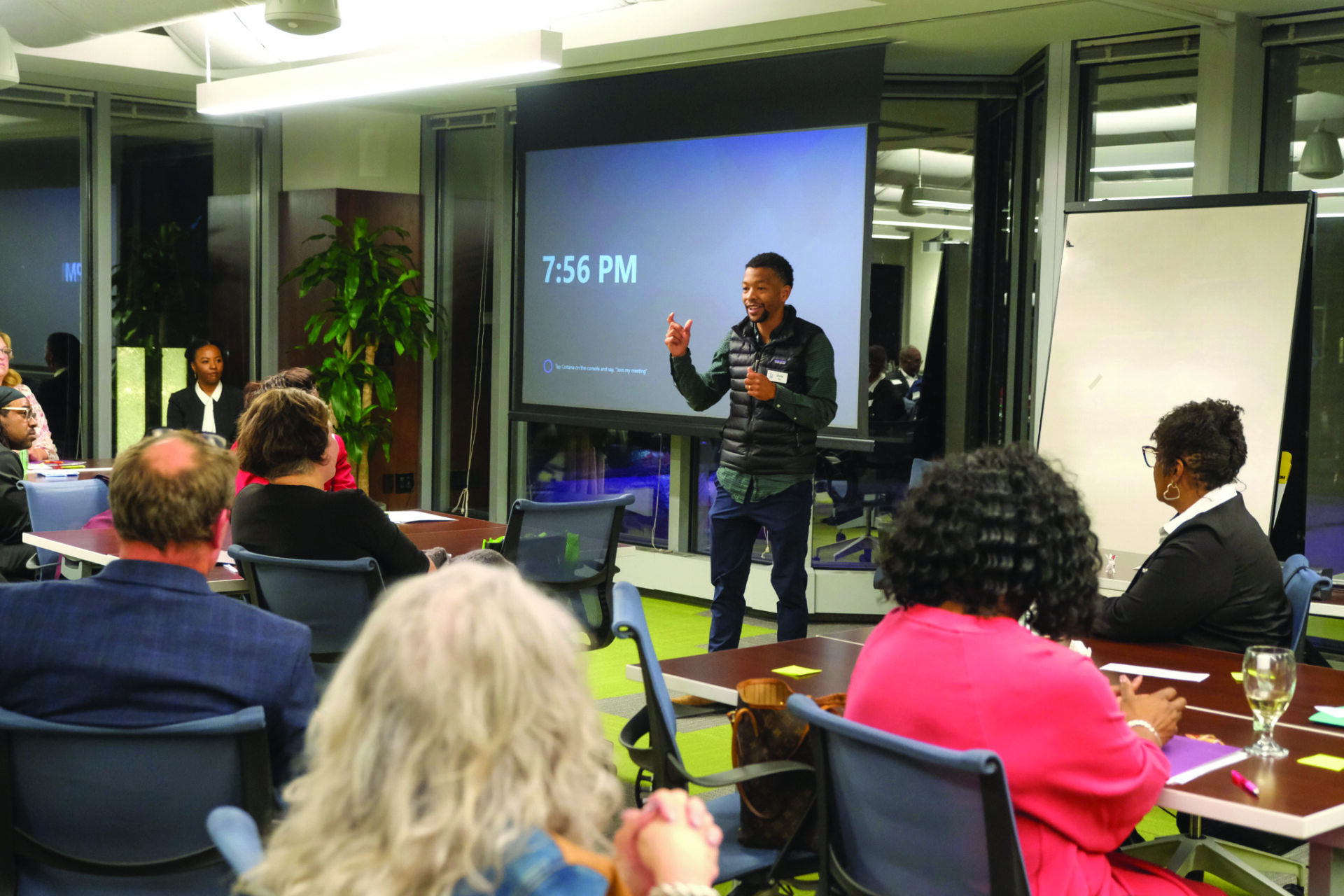
This codesigned work of the Social Justice Fund did not just result in a new grant program supporting grassroots activists. It has offered the foundation an opportunity to build relationships with activists and learn about their work in the areas of disability justice, criminal justice reform, education justice, and the concept of rest for Black and Brown people. The learnings from our grantmaking and from the advisory committee members led to a new grantmaking pillar under our strategic plan: equity and social justice.
Compensate community members for the work they do for you
It is common practice to engage community members and nonprofits in foundation-led projects that require their time and expertise, be it serving in a focus group, as a grant reviewer, on an advisory committee, or as a guest speaker. But because Black, Indigenous, and people-of-color (BIPOC) led organizations that serve BIPOC communities are disproportionately understaffed and under-resourced, they endure a greater burden when they take time to support foundation initiatives.
As staff, we are compensated for community engagement. The consultants and philanthropic advisors we engage are also compensated. But oftentimes, the contributions of our community partners—our most valuable resources—are unacknowledged or unsupported. The depth of their knowledge and life experience is immeasurable. Compensating community members recognizes them as experts who make valuable contributions like any other professional.
With this in mind, The Pittsburgh Foundation developed compensation guidelines for community leaders, nonprofit organizations, and residents who help staff to advance the foundation’s mission. Because nonprofit leaders and community residents provide expertise in a variety of roles to support foundation initiatives, it became increasingly clear that compensation was required. These guidelines outline stipends and honorariums depending upon the roles and responsibilities individuals take on.
Extend support beyond grant dollars
Too often, traditional, transactional philanthropy simply supplies funding and looks for the final report in 12 months. This behavior not only creates walls between grantees and funders but also between the funder and the communities it seeks to impact. It obscures the needs of organizations beyond financial support. Organizations can struggle with data collection and evaluation, grant writing, board development, storytelling—the list goes on and on.
Several years ago, the now-current vice president of program and community engagement created More than Money at The Pittsburgh Foundation. More than Money is both a programmatic effort and an ethos that extends the foundation’s support and resources to nonprofit organizations and community leaders beyond the dollars that we distribute through our annual grantmaking. It was inspired by a 2014 keynote given by the late ambassador James Joseph in which he called for philanthropy to use “not just conventional assets, but other forms of capital that are so easily overlooked or, at best, underutilized.” He challenged philanthropy to adopt an “integrated use of social, moral, intellectual, reputational and, of course, financial (SMIRF) capital for making a community more of a community.”
Through More than Money, The Pittsburgh Foundation utilizes nonfinancial capital to advance equitable practices, strengthen networks and ecosystems, amplify and drive resources to under-resourced issues and organizations, and enhance the knowledge and capabilities of nonprofit leaders. For example, we use our social capital through media and communications to spotlight the work of grantees and the communities they serve. We leverage our reputational capital to connect grantees to other funding opportunities and to aid them in expanding their networks to individuals and opportunities that can assist with advancing their missions.

More than Money has traditionally supported program initiatives intended for individual artists and grassroots organizations with budgets of $600,000 or less, and which tend to be BIPOC-led and -serving, in the areas of basic needs and arts and culture. With the launch of The Pittsburgh Foundation’s new strategic plan, the aim is to integrate More than Money into all of our foundation-directed grantmaking. The ability to leverage social, moral, intellectual, reputational, and financial capital requires programmatic staff to have relationships with grantees and communities beyond what they see in grant applications.
We must be intentional about creating safe spaces where nonprofit leaders can share their successes, challenges, and failures—and where they are valued as educators and thought partners.
Know your “why”
Beyond the difficult dance of give and take, finding common ground, and knowing when to step up and step back, the most critical element of working to center relationships is knowing your why. It is easy to try to find the newest framework to implement, or to employ a consultant to evaluate how equitable your process really is, but it all comes back to your “why.”
The Program and Community Engagement department at The Pittsburgh Foundation recently did an internal exercise to determine our collective why. We developed a statement that defines why we do what we do and guides how we practice our work and how we show up in the work and community. It defines the barriers to, and what we seek to eliminate from, our grantmaking. It may seem strange to define a “why” while in the midst of the work, but it was an amazing exercise that saw 80-plus years of experience in philanthropy finding consensus around how we will show up, engage, and practice our work. Every deep relationship has a “why” to help guide people through the good times and the challenging ones. Philanthropy’s relationship with communities and grantees should be no different.
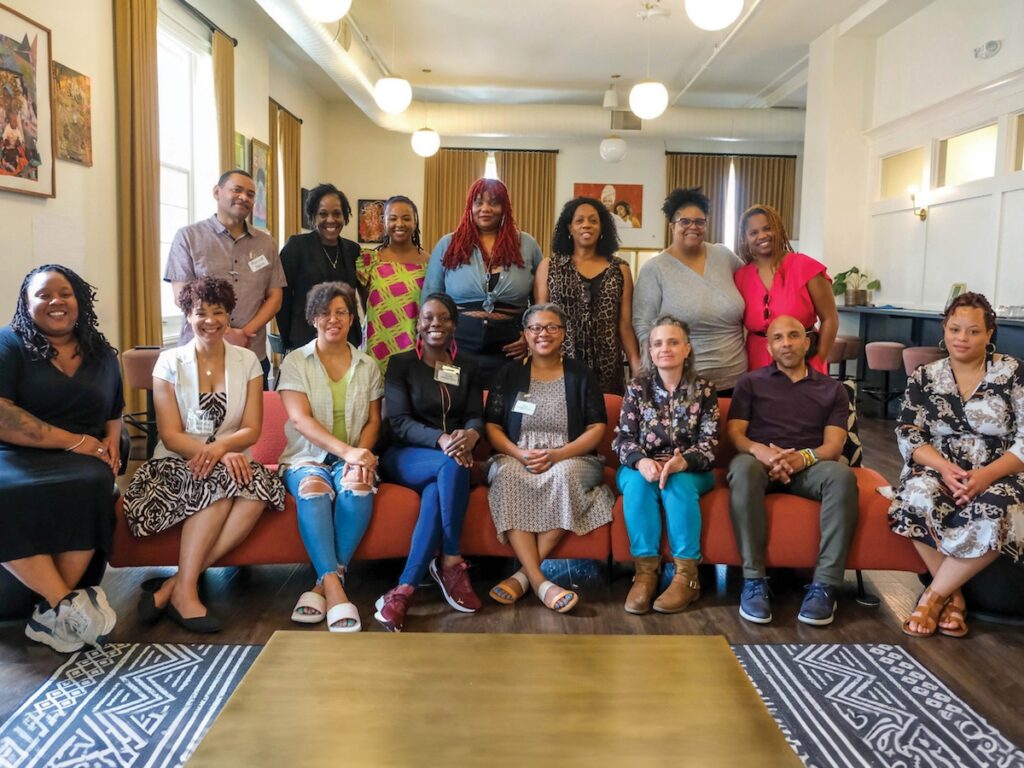
Image: Social Justice Fund grantees gathered with Pittsburgh Foundation staff for a day of reflection and peer networking and a presentation by facilitator and principal consultant Justin Laing of Hillombo. Photo courtesy of The Pittsburgh Foundation.
Meet the Author
Traci Johnson
Director of Grantmaking, The Pittsburgh Foundation
Principles for Peak Grantmaking
Read more insights related to this Principle:
Learn, Share, Evolve
Related Topics
Grantmaking LifecycleRelated Articles
Beyond Annual Renewals: How Multiyear GOS Changes Grants Management
READ
Rethinking Indirect Cost Rates to Support Nonprofit Financial Health
READ
The Ultimate Guide to Automation in Grants Management
READ