Journal | Issue 21
Diversity, Equity & Inclusion
Participatory Grantmaking: A guide to authentic community engagement

In 2020, Oregon voters passed Ballot Measure 110, decriminalizing substance use and establishing one of the largest participatory grantmaking programs in the state’s history. Measure 110 is historic for taking a hard stance against the War on Drugs and for employing a participatory grantmaking strategy which will distribute over $200 million in state marijuana tax revenue collections every two years. The new law requires the state health agency to manage the fund with a community board of around 25 leaders recovering from addiction and working in the behavioral health space. Eligible grantees include community-based organizations, local governments, and the nine federally recognized Indigenous tribes who are now providing a more connected substance use and prevention treatment system of care, free-of-charge to clients. No easy task.
As a former program officer in philanthropy and policy analyst for Multnomah County, one of the state’s largest behavioral health funders and providers, I was charged with tracking the fund’s development for the county’s Board of Commissioners and advocating for legislation that guided how Measure 110 was implemented.
The state hit some major bumps along the way—namely, in figuring out how to authentically engage communities in a participatory grantmaking program, effectively share power, and build trust. In my role, I collaborated with key community partners and state legislators in Oregon’s 2023 legislative session to make improvements in how the fund will be managed going forward through the passage of HB 2513. The new policy changes we formulated will make important steps toward providing the community board with better leadership and support.
So what lessons can grants professionals take from Measure 110 to create practices that ensure communities are more authentically and strategically engaged in participatory grantmaking programs?
Build the community board with care
There is a significant amount of research and guidance available on the importance of building a board or committee that reflects the community you aim to serve. Funders should take considerable care in ensuring the group is inclusive of community experience, as well as accounting for various demographic factors, including age, disability, ethnicity, gender identity, race, and sexual orientation, knowing that their life experiences will benefit the program design and decision-making processes.
Think carefully about what perspectives, experiences, and insights are needed for conversations with community members, and think beyond demographic matrices and open calls to join a participatory grantmaking board. Funders are often tempted to seek assistance from well-known community members who frequently volunteer for these kinds of efforts. Rather, find individuals who represent differing perspectives, especially those from younger generations and those who are searching for a meaningful engagement opportunity and can contribute new and important insights. A recruitment advisory committee can be especially helpful in identifying ways to engage highly knowledgeable frontline community leaders who are best equipped to ensure transformational and long-lasting outcomes.
When considering potential participatory grantmaking committee members, funders must think carefully about the committee’s composition as well as each candidate’s communication style, ability to work collaboratively, and willingness to listen to others. Participatory grantmaking can be a difficult, time-consuming process, as it relies on folks feeling safe to share their perspectives, think through complex questions critically, and find consensus. Committee composition also needs to allow for a democratic and inclusive process that leaves people knowing they are making a real contribution and being heard.
Key questions to consider:
- What are the intentions for bringing community expertise into this program?
- What does your organization hope to achieve by bringing in community expertise?
- How is the diversity of candidates being assessed? Is the working definition of diversity fully inclusive of all people in the community?
Set community members up for success
At the outset, funders should understand which components of the process will be staff-led versus volunteer-led and the level of control they are willing to cede to community boards before recruitment begins. Without clearly defined and communicated roles, a disappointing and frustrating process will likely result.
Some participatory grantmaking programs involve community members in each element of a grant program’s design and implementation. For others, it may be that program staff work with a smaller subset of committee members to take the lead in developing various aspects of the grantmaking process. Ultimately, it is the funder’s responsibility to manage the expectations of community members and explain the realities of this work so that volunteers understand fully the training and time requirements involved.
At the most basic level, funders can show they value community member contributions through compensation and support. Community members should be fairly compensated for participating on committees, receiving a stipend for time spent and travel costs. Also consider the tools they might need—a laptop, tablet, or virtual platform—and whether those resources allow all participants (including individuals with disabilities) to fully participate in the process.
A high-level overview of the expected time commitment, key dates, and responsibilities for committee members should be provided when recruiting members to set expectations, ensure all members know what they will be asked to do, and confirm that they have the availability to do so in light of other obligations.
Key questions to consider:
- Where in the grant-administration and decision-making process are staff, and your organization as a whole, comfortable in letting go of power and control?
- Does staff have the capacity to dedicate significant time to listening to and acting on the perspectives of community members?
- What is the local rate for compensating volunteers for this kind of work?
- What other resources can be provided to community board members?
Develop training opportunities that minimize bias
While funders already know how to more transparently evaluate grant requests, conflicts of interests and biases, remember that community members are typically new to this role and therefore have not been briefed on how to consider their own community relationships. Consequently, funders must outline early on their tolerance for relational or familial bias and provide examples of the information that is appropriate to consider and the scenarios by which it is right to excuse oneself from a grantmaking decision. Discuss various scenarios with a community board beforehand, covering what is fair or unfair to bring into any grantmaking discussion.
Funders often equate low risk tolerance with good stewardship of resources. Out of caution, some funders may be less flexible around grant terms, overly restrictive regarding how grant dollars can be used, or exhibit bias towards particular organizations (e.g., those that are new, familiar, under-resourced, well-resourced) or requests (e.g., programmatic or general operating support).
In keeping with PEAK’s Steward Responsively Principle, discuss organizational risk tolerance and come to an agreement collectively on how it should influence the program’s design. Providing opportunities for a committee to discuss, in depth, the “how” of grantmaking as well as various ways they can support organizations will ensure greater transparency and consistency in their grant decisions. Without these conversations, committee members—and possibly the community at large—may lose trust or question the fairness of the program overall.
Key questions to consider:
- How are committee members being informed on the various challenges faced by nonprofits and the communities they aim to serve?
- What is your organization’s comfort level with committee members bringing information from outside the application into grantmaking decisions?
- How are committee members being trained to vet and assess grant requests? What grantmaking standards and policies are already being used to guide grantmaking staff that can be shared as part of committee member training?
Keep it simple!
As discussed in PEAK’s action planner Strategies for Driving Equity in Grantmaking Practice, which supports the Drive Equity Principle, inequities in grant administration processes create a siloed, top-down power dynamic among funders, nonprofits, and the populations they aim to support. Committee members must be educated on the careful balance needed to ensure that the information requested from applicants is adequate to fully understand their grant request without exhausting the committee’s own capacity for reviewing that information and making decisions. Discuss ways to limit the time required to complete the application and ways that foundation staff can take on the work of screening for eligibility, confirming tax status, or assessing financial trends for an organization. Staff must also guide members in understanding the difference between nice-to-have and need-to-have information.
Key questions to consider:
- What staff capacity is available for training and supporting community members in program design and implementation?
- How is staff educating community members on ways to narrow the power gap for nonprofits?
Build trust by committing to long-term listening
Finally, foundations need to develop processes that foster collaboration and build trust with the community, ensuring that their inclusion in the process feels authentic and not extractive. Some members may have lived experience that impacts how they show up, and that may result in them offering more questions about the process than solutions. Foundation staff must enter these discussions with humility and empathy, readying themselves for some tough conversations. Working with a community in this way takes time, and trust can only be built by providing brave spaces for authentic sharing and feedback. Without incorporating community members in the continuous design and evaluation of this effort, long-lasting trust will not form.
Key questions to consider:
- Does your staff have the capacity and time to work in the community to cocreate a participatory grantmaking program?
- How ready are staff to listen to and act on community feedback regarding programs and other ways they are working in the community?
- How long does your organization envision wanting to lead a program of this kind? Is your organization willing to invest in the launch and continuous improvement of the program long-term?
Though participatory grantmaking is not a one-size-fits-all practice, it is still possible to learn from the experience of others. Here are a few organizations whose work can help you map your journey.
Disability Rights Fund (DRF) supports the disability rights movement around the world by resourcing organizations of persons with disabilities to advocate for equal rights and full participation in society. Participation is embedded in their governance, grants decision-making, and staffing. DRF’s intersectional model resources the leadership of people at the movement’s margins, such as Indigenous peoples with disabilities, refugees with disabilities, and rural persons with disabilities. Gender transformation is a priority at DRF, recognizing the disproportionate impact of ableism and structural patriarchy on women and girls with disabilities and persons with disabilities of diverse sexual orientations, gender identities and expressions, and sex characteristics.
The Walter & Elise Haas Fund leads the Learning Lab and BAY Fellows programs, recognizing that young people are leaders right now, and that they must be included in grantmaking decisions to fully address the challenges they are experiencing in accessing educational services and supports. In the early stages of the COVID-19 pandemic, the Haas Fund first engaged 100 folks, half of them youth, to recommend grants in 2020 and 2021 as part of the Learning Lab initiative. They recently expanded on this effort and piloted a paid youth fellowship for 11 Bay Area high school-aged and transitional-aged young people to award $1.5 million in general operating support grants annually to BIPOC and LGBTQ+ youth-serving organizations in the community.
Since 1974, Haymarket People’s Fund has employed a participatory grantmaking strategy to award sustaining and urgent response grants in New England for community organizing toward systemic change. The funding panel composed of regional community organizers determines grant awards each year, awarding over $33 million dollars to grassroots organizations in rural and urban communities in the region.
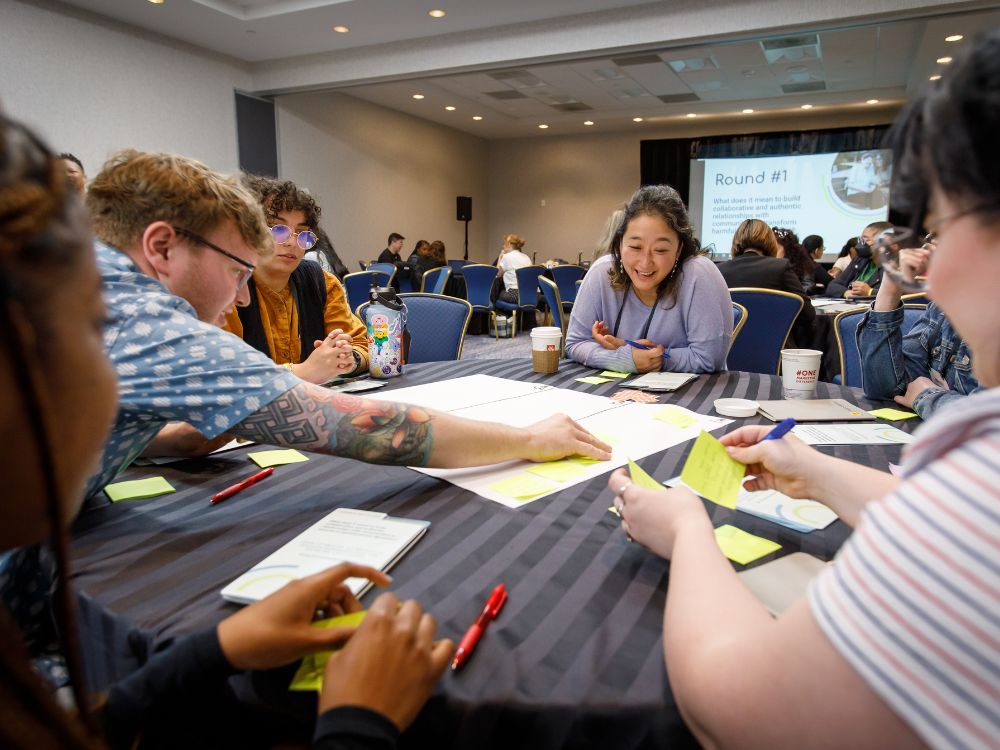
Image: Walter & Elise Haas Fund Executive Director Jamie Allison with W&EHF BAY Fellows and Skillman Foundation President’s Youth Council members in Atlanta, where the youth grantmakers presented “Get Ready for Gen Z: Foundations Driven By Youth” to a national audience. October, 2023. Photo Courtesy of Walter & Elise Haas Fund. Photo courtesy of Walter & Elise Haas Fund.
Meet the Author
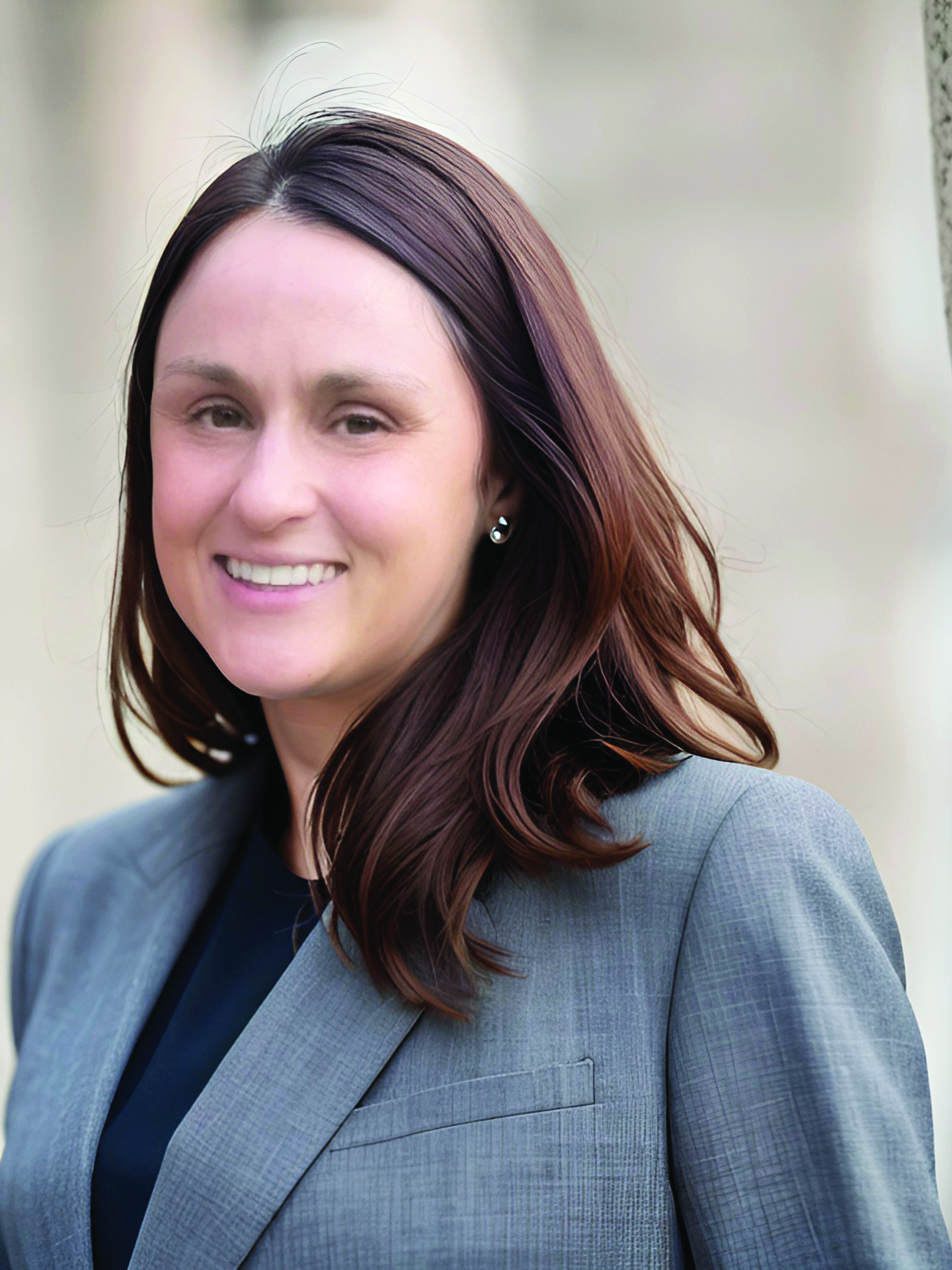
Vanessa Elkan
Senior Knowledge and Learning Manager, PEAK Grantmaking
Principles for Peak Grantmaking
Read more insights related to this Principle:
Learn, Share, Evolve
Related Topics
Diversity, Equity & InclusionRelated Articles
Intentional Relationships Require Courage: Five Undoings for Philanthropy’s New Year
READ
Advancing Equity Through HBCU Leadership
READ
Leading With Love and Finding Joy in 2025
READ