Some fifteen years ago, I was blissfully sledding with my family when I suffered a brain aneurysm. In a moment, I went from playing with my three- and five-year-old kids to being fully paralyzed on the right side of my body. In an instant, I was transformed from an active young professional and mother to a woman in the hospital facing an extended stay. I wanted some assurance that I would make a full recovery, but the doctors’ expectations were low.
While needing to put all my attention into getting better and managing the impact on my family, I also had to navigate one administrative hurdle after another of hospital hand-offs, forms, and paperwork, caregivers and insurance rules, short and long-term disability and claim reimbursements. It was like trying to put together a massive jigsaw puzzle all in black while relearning how to cognitively function.
That’s when I realized: Process is personal.
And this is true for so many of our systems and processes, especially in the philanthropic sector, which too often can disrupt the crucial work and momentum of grantees with burdensome administrative tasks.
As Packard Foundation’s director of grant process management, I continually assess and balance our needs as an effective grantmaking institution in ways that prioritize our grantee partners’ time and effort. In May 2022, we reached an important milestone in this work when we completed a three-year “grantsformation” that assessed and improved our end-to-end grantmaking process.
Based on grantee feedback, we wanted to get money out faster, be more efficient, and reduce grantee burden. To succeed in this effort, we worked to better understand how our grantee partners experience our processes in the context of their work.
Change we can experience and measure
We recently updated our approval thresholds and processes to get funding to grantees as quickly as possible while maintaining appropriate governance. Previously, all grants above $250,000 were approved by the board and were awarded quarterly. Now, only grants greater than $1 million go to the board, and everything else, about 95 percent of our grants, and 44 percent of our funding, are awarded on a rolling or monthly basis.
In addition, we removed our Office of Foreign Assets Control check for outright grants made to 501(c)(3) organizations, reducing that paperwork for approximately 65 percent of our grantee organizations. We also rightsized our practices by implementing new processes and criteria for proposals and reporting based on the type of grant and grantee relationship. For example, we consolidated 28 unique proposal guidelines into one standard set of guidelines. In addition to a more consistent experience, grantees now answer only relevant questions in proposals, only enter information once, and staff maintain less custom documentation.
While the above changes reduce grantee burden, there are additional ways we can increase forward momentum. Our new rapid response process allows us to expedite time-sensitive funding needs. Centralized grantmaking training and materials make for a more consistent experience and one that can be collectively monitored and improved over time. We’ve also added an amendments process to make it quicker and easier to make minor adjustments to grants.
We must work together to understand why processes exist. By centering grantees, using data and feedback loops, and hearing from staff that do this work, we get clarity about when to hang on to a process and when to let go.
One way we do this is by regularly convening staff from across the organization to talk about pain points. Grants and compliance specialist Linh Tran described it like this, “With open and honest conversations so we get to a place where we can move forward and make a process that works for everyone.” From grantees to programs to operations, all our knowledge together creates a whole picture.
Collectively and continuously reimagining
There was nothing like a global pandemic to bring this knowledge of our interdependence into sharp relief. The foundation’s “grantsformation” journey paralleled and was informed by a society reinventing itself. This is especially important considering that many of philanthropy’s administrative rules are self-created and self-imposed.
A report by PEAK Grantmaking released in July 2020 gives a snapshot of the impact of that moment: “Many practices that seemed necessary just last year (grant restrictions, reporting requirements, paper-based processes, 5% payouts) or difficult (collaborative funding efforts, virtual decision making, open conversations with grantees about risk) are now—mere months later—standard operating procedure.”
While the sector still has a long way to go in upending legacy beliefs and practices, at the Packard Foundation, we’re on our way. While this initial overhaul took three years, we’re now equipped to make the grantmaking process better—not in another three years, but continually.
What does this ongoing change process look like? We now have regular check-ins and convening spaces with stakeholder groups to discuss, brainstorm, and gather feedback on our practices. New dashboards and metrics monitor new features, functions and processing times, and evaluations assess the relationship between changes and impact. We also maintain an ongoing roadmap of new ideas to explore and prioritize what’s up next.
Thinking back on my hospital crisis makes this progress even more gratifying. Today, with the support of so many people, I’ve recovered far beyond expectations. Still, that incredibly stressful time would have been much more manageable had the US health-care system put me in the center with practices informed by me and all the hardworking medical professionals around me.
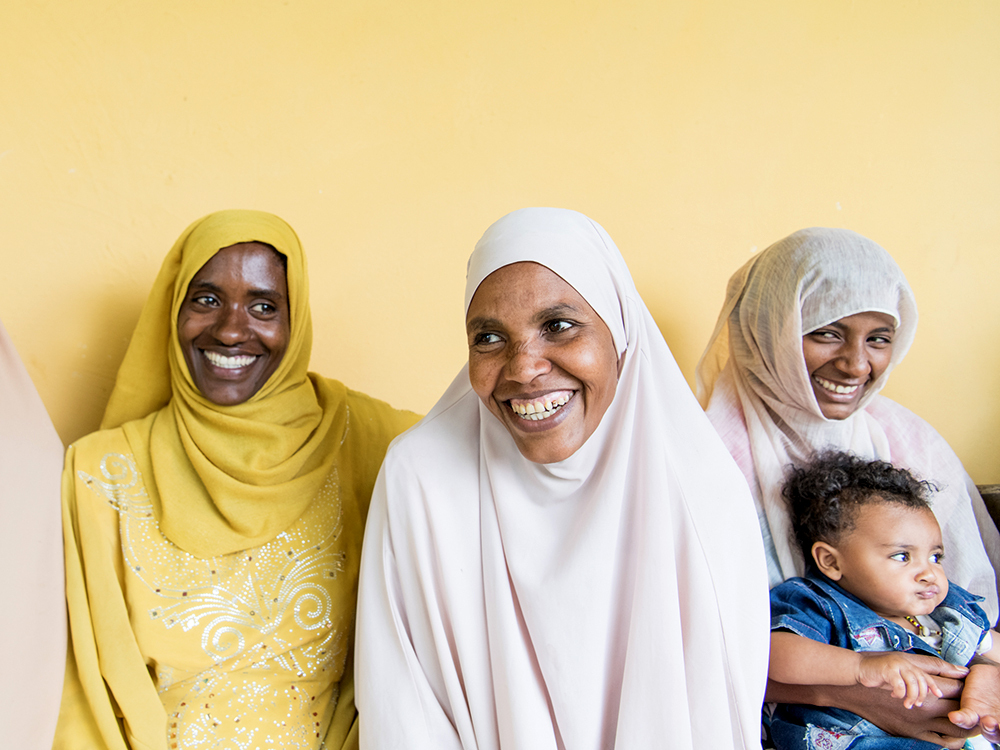
Image: A group of Ethiopian women partake in a family planning training program via the Ethiopia Public Health Association, which Packard supports.
Credit: Maheder Haileselassie Tadese/Getty Images/Images of Empowerment
Meet the Author
Jennifer Adams
Director of Grant Process, Packard Foundation
Principles for Peak Grantmaking
Read more insights related to this Principle:
Learn, Share, Evolve
Related Topics
Grantmaking LifecycleOrganizational Learning
Related Articles
Maintaining the Learning Momentum After a PEAK Convening
READ
How a PEAK–BSU Partnership Helped Me See a Career in Philanthropy
READ
Six Insights on Organizational Learning
READ