In 2021, PEAK unveiled a new strategic framework anchored in four ideas that will guide our work in the years ahead. One of those anchors is a commitment to “emergent learning” as a core philosophy, embracing an adaptive learning process to advance our Principles through our peer learning community. The fall 2022 edition of PEAK Grantmaking Journal delves into the concept and practice of emergent learning which “values maintaining communal spaces where people can safely learn, practice, explore, and make mistakes in the pursuit of building knowledge and skills. Unlike traditional, linear modes of learning … positioning organizations to nimbly respond to complex and rapidly evolving operating environments.”
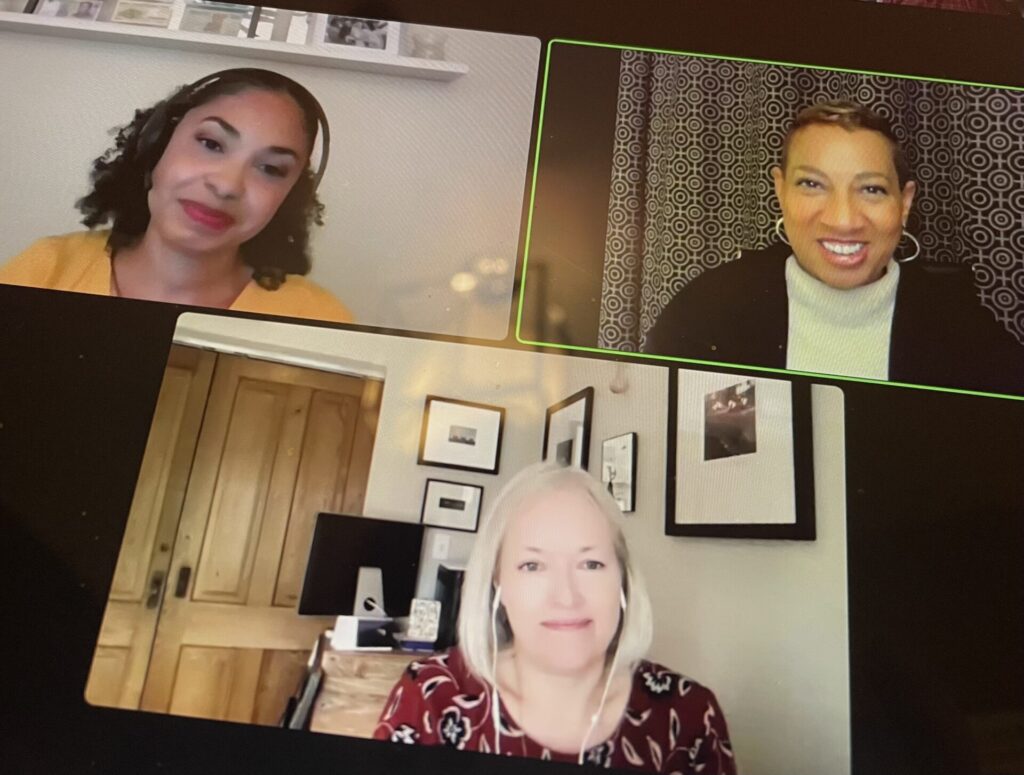
Working in close collaboration, Journal guest editors and PEAK staff develop and produce each issue—and it’s always an emergent learning journey. In our recent Community Conversation, Melanie Mattthews, cofounder of Brassington Consulting and a former PEAK board member, and Shantelice White, who cochairs PEAK’s Black Caucus, shared their stories of the experience of this volunteer role. Edited highlights of their conversation with PEAK President and CEO Satonya Fair follow.
Fair: The Journal has been a labor of love. We relaunched it with Black Voices in Grants Management back in 2020 when we all thought the world was ending, and creating each issue has become a year-round, thoughtful exercise in engaged community action. The Journal is part of the movement. It’s a piece of what we do. So to kick off, how did this experience really strengthen your emergent learning muscle?
White: I recognized that it was an opportunity for me to talk about my experiences in a way that I never had before. And I was embracing things that scared me a bit because this process terrified me. But at the same time, I was so engaged and excited to be a part of it, and I trusted the PEAK team and their process.
As a team, I felt like we were practicing what we were preaching every day, coming together and wrestling with the working definition of what it means to be an emergent learning individual and what it means to be an emergent learning organization. We challenged each other, we stretched each other, we researched who else was talking about this and what they were saying and how we could add to it. It was exhilarating, it was terrifying, and it was such a good experience and very much worth the investment of time.
Fair: And Melanie, as a former board member and someone who’s been invested in this community for a long time, why was it important for your piece to really be grounded in highlighting new grantmaking models?
Matthews: More and more makers are looking beyond the traditional 501(c)(3) models, so as grantmakers and operations professionals, we have to start looking at different entities and being able to adapt to those different entities. I wanted to get that message across that the multi entity space is a really exciting space to be in, and maybe the Journal could to help people recognize that they can do it.
And I would also echo what Shantelice was saying. I don’t know that either of us knew what this process was going to be like, but it was an amazing experience. It’s an emergent learning process.
Fair: What aspects of the process did you find easy to embrace, and how were the differences of opinion or tensions resolved?
Matthews: This journal is truly reflective of what emergent learning is. After I wrote my piece, Lita reviewed and left questions and comments, and it was hard not to take it personally. But, I had to trust and understand that I was in an emergent learning process. What could I learn from the questions I’m being asked? Sometimes I realized I wasn’t clearly saying what I wanted to say. And there were other moments where I’d get a question and I could push back and say why something was important to include. Trust is really key. It’s everything. You have to have trusting relationships because otherwise it’s hard to be vulnerable.
White: We invested time in coming together and getting to know each other, starting with the first kickoff meeting. We felt safe to challenge each other and share our ideas. But it was never personal. We knew it was part of making the final product better and something very useful for our sector and for ourselves and for our teams. It always felt like a safe space and it always felt like we were representing our lived experience and our academic and professional experience–and that mattered.
Fair: What would you like to share as being your new favorite thing that you’re going to go to in the playbook?
White: I want to continue to unlearn this idea of perfection. As grants managers, we reward perfection because this is serious work. But I want to get to a point where we are rewarding curiosity and what makes us human: our emotions, our compassion, moving toward each other and not away from each other. And part of being human is making mistakes. But if you’re not making mistakes, you’re not growing, you’re not moving forward.
Matthews: It’s the vulnerability piece. There is comfort going into a safe space where you don’t know what’s going on, you’re not really sure of the process, and just trust that it’s going to be okay. I feel like we’ve been on this amazing journey together and we’ve created something together that no one else has. In being vulnerable, I got to meet some amazing people and have this amazing experience.
For more, PEAK members can view the video recording of this conversation.
Meet the Author
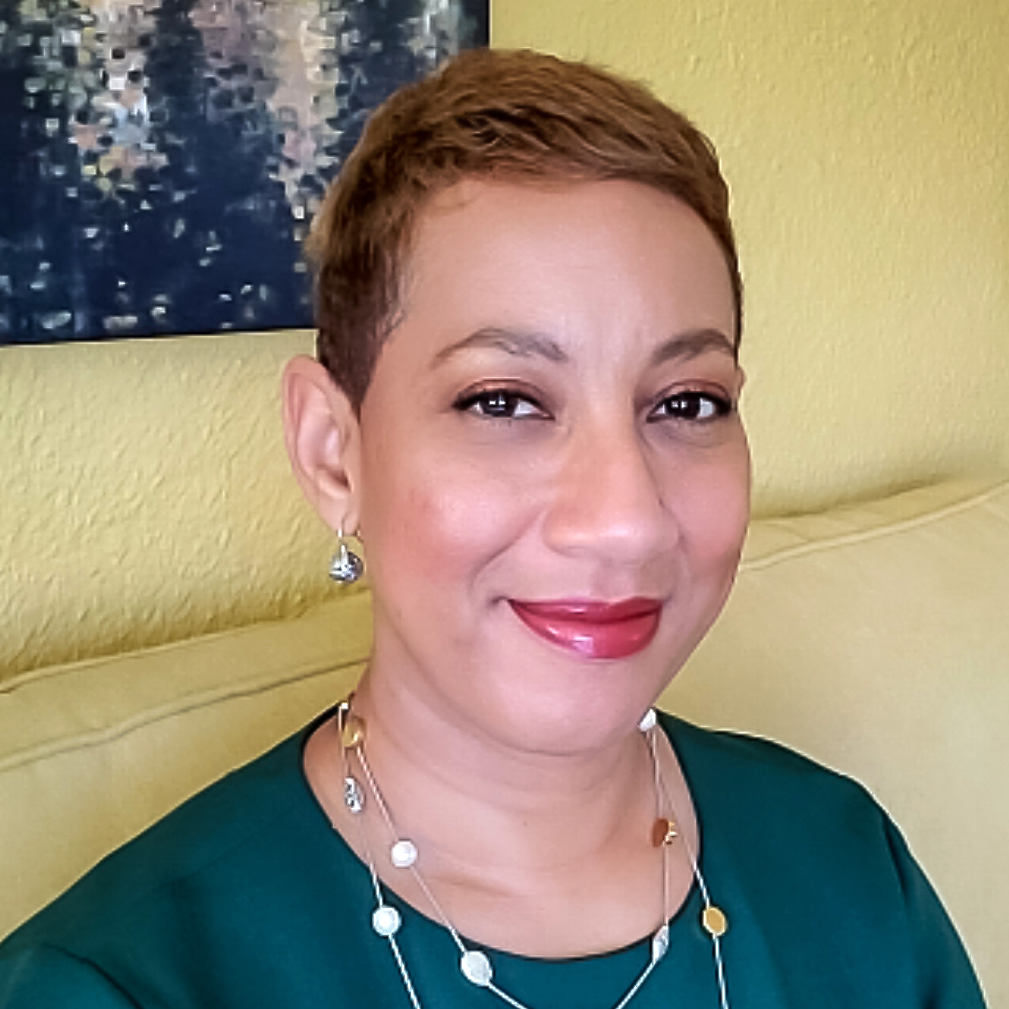
Satonya Fair, JD
President and CEO, PEAK Grantmaking

Melanie Matthews
Part-Time Executive Director, Cedarmere Foundation; Founder, Brassington Consulting; Senior Advisor at BDO FMA
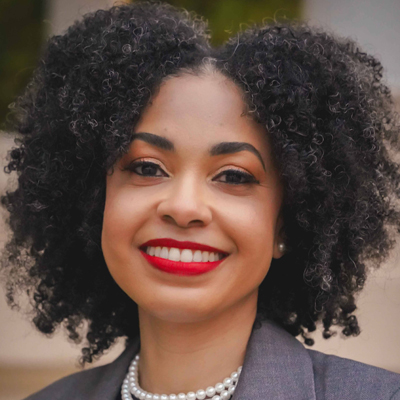
Shantelice White
Cochair, PEAK Black Caucus
Principles for Peak Grantmaking
Read more insights related to this Principle:
Learn, Share, Evolve
Related Topics
Organizational LearningRelated Articles
Maintaining the Learning Momentum After a PEAK Convening
READ
How a PEAK–BSU Partnership Helped Me See a Career in Philanthropy
READ
Six Insights on Organizational Learning
READ