Journal | Issue 21
Diversity, Equity & Inclusion
The Future of Knowledge Work Depends on Centering Equity
Grantmaking has utilized knowledge practices since its beginnings, from research for demonstration projects to evaluations and assessments of grant impact. Today, we use surveys, focus groups, grant reporting, evaluation, landscape scans, and similar activities. However, many knowledge work practices are rooted in outdated foundation approaches. Grants professionals often bump up against concepts, tools, and methods for knowledge building that ultimately undermine efforts to embed more equitable grantmaking practices across the sector.
In the past decade, more and more grants professionals have taken on roles that relate to knowledge work. A quick scan of PEAK’s list of more than 8,000 members shows that over 10 percent of professionals now have titles that somehow relate to knowledge work, including research services, measurement and evaluation, evidence and learning, data systems, data operations, information technology, social impact, and insights. Consequently, developing intentional knowledge practices that are centered on shared meaning-making is crucial to the future of the field.
When we center shared meaning-making, we can ask what knowledge work is and what knowledge work can do when we make it central to change and equity strategy. However, there is so much information coming at us every minute of every day from many directions, that it’s easy to get inundated and difficult to intentionally build equitable knowledge work practices that honor the influences that have helped to energize the growth of our sector. By making three key shifts in how we understand knowledge work, we can lay the foundation for developing a uniquely creative and varied tool kit for the sector.
Embrace the social context
Like many of you, I have experienced years of subtle and not-so-subtle messages that knowledge is something produced outside of myself. It is something that someone else makes and which we then accept and use. We are taught that knowledge tools and approaches are created by people in positions of authority, and we have to attend big institutions to become experts.
However, for as much as we may value the notion of skills and experience, focusing exclusively on formal expertise doesn’t keep us steady and strong in our knowledge work. Rather, focusing on the essence of knowledge work—meaning-making—is what keeps us grounded. Meaning-making is active and is constructed socially. Context matters. Our understanding and lived experiences of the social structures around us make a difference as we develop efforts and strategies to change inequitable structures.
Once we frame knowledge as being socially constructed, we must ask questions that challenge old norms. Who is involved in meaning-making? Whose questions are being addressed? Whose interpretations are prioritized? How are possibilities for change narrowed or expanded through our methods and processes?
When I have facilitated discussions that start by questioning knowledge itself, we can explore challenges from past research and data training. We discuss the wonder of exploration, the challenges of credibility, and the power of naming truths. We acknowledge the pain related to the ways that research has historically been used to oppress communities in order to maintain dominant narratives. At times, memories of grandparents and stories of wisdom-sharing are brought into the room. As a result, we create space for healing and creativity that allows us to explore how knowledge work needs to drive equity going forward.
This more expansive framing may bring up insecurities around expertise or fears of being seen as imperfect because traditional norms are not being upheld. But consider that, for knowledge processes to be trustworthy and credible, offering transparency in our processes and creating dynamics that honor multiple perspectives are more important than trying to consult or be the perfect expert.
Recognize the power dynamics inherent in knowledge work
Power is often an uncomfortable word for those guiding knowledge work. A sense of humbleness is important in that it encourages us to realize the limits of our own experiences and perspectives and to keep us seeking deeper understandings. Unfortunately, humbleness can also disguise knowledge work as passive and can prevent us from acknowledging the power dynamics in our knowledge practice—and that’s when we risk doing damage through our processes. Humbleness can also lead us to exclude people from knowledge work, thinking that the work is secondary or not important enough to take up others’ time and space. The questions we ask, the parties we invite to do data collection and analysis, and the decisions we make about how to represent and share interpretations of data all require focused attention in order to expand access to knowledge processes. Creating an environment where meaning-making is more accessible and inclusive is one of the most powerful actions grantmaking professionals can take in their knowledge work. Acknowledging the power dynamics in knowledge practice makes knowledge work a leadership endeavor. However, this is not about where the role is positioned within an organization. Rather, it’s about how the role of guiding knowledge work is embodied and enacted.
By maintaining a leadership focus, we are prompted to reflect on our ethics as we design a grants management system, a program evaluation, and the ways we facilitate capacity building or grantee networks engagement. We can design knowledge frameworks to encourage power sharing rather than extraction. We can show up for knowledge work in solidarity with community partners rather than as an authority. We can harness knowledge practices to collectively voice structural inequities rather than status quo ideas and behaviors. These are all made possible through conscious decision-making in our knowledge practice.
Advocate for trajectory framing
This third shift is about what we do with the power embodied in, and enacted through, knowledge work. Even though our responsibility as grants professionals is to align our work with strategic change goals, it is actually more appropriate in knowledge work to talk about the trajectories that the knowledge work is enabling. Rather than setting a benchmark to be obtained, trajectory framing is about acknowledging where we have been and where we are being called to go. We negate the creative potential of knowledge work when we assign a set goal to it or when we reduce it to a list of activities to be checked off. When, instead, we ask ourselves how our knowledge practices are helping to move us along a trajectory toward equity, we can realize the value of knowledge work itself.
Trajectories can start off as very conceptual, like “moving from oppression and restriction toward expansion,” or “moving from fragmentation and divisiveness toward unity in diversity.” However, in order to become real, we need to emphasize the on-the-ground action of the trajectory framing in our knowledge work.
For example, include grantee partners in the meaning-making process by discussing with them the most important questions to ask on an annual grantee report. Grantee partners are likely the most important people to include in this analysis to understand what community data actually should mean to programming decisions. One possibility for using knowledge practice to address divisiveness might be to include cross-department colleagues in listening to and interpreting focus group discussions and including their interpretations when reporting on the meaning of the data for various aspects of the foundation’s activity.
Trajectory framing can be evident in an organization’s culture or way of operating internally, and can also take an outward focus on programming and capacity or on network building. Whether internally or externally focused, shifting from goal-centered thinking to trajectory framing is crucial as it applies to our knowledge efforts themselves. It is an important way to harness opportunities that can energize social movement and positive change.
What we can do next
In making these shifts, we fully acknowledge that the essence of knowledge work is meaning-making and that knowledge practice is central to equitable change. Grants professionals, via their responsibilities in designing knowledge processes, can take the lead in reimagining knowledge work for a philanthropic sector that is expansive, collective, active, and iterative. Together, we can create more inclusive ways to make meaning with our grantee and community partners.
We can also bring colleagues into knowledge work processes and fully integrate knowledge work into our foundations’ activities. We can prioritize sharing multiple interpretations of the information that we collect. We can create space for opening up to an exciting discussion of our knowledge intentions, challenges, and tools. We can help each other, and the sector, build new skills and competencies that fully align knowledge practice with our equity desires. Let’s stay humble in our seeking while also acknowledging the importance of knowledge work to change efforts.
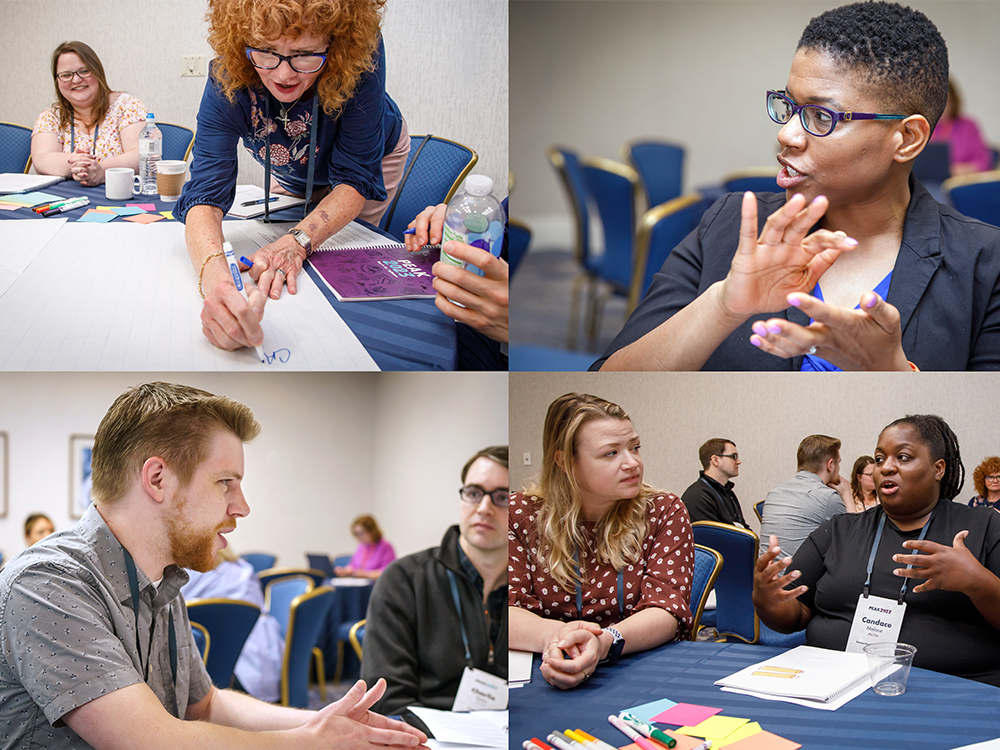
Image: Two participants engage in conversation at a PEAK2023 preconvening workshop, Knowledge Deep Dive for Grantmaking Professionals, facilitated by Angela Frusciante. Photo by Greg Smith.
Meet the Author
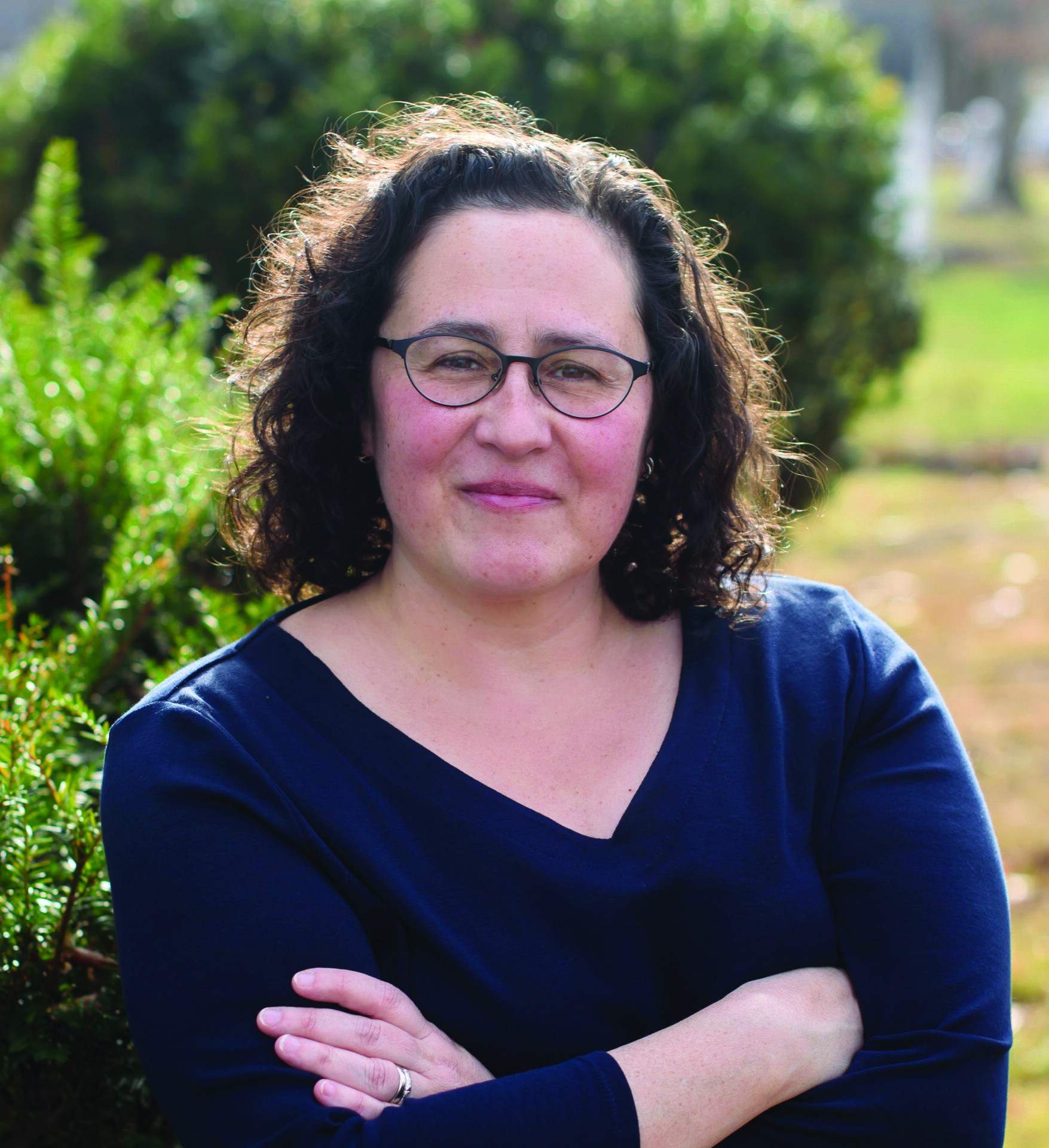
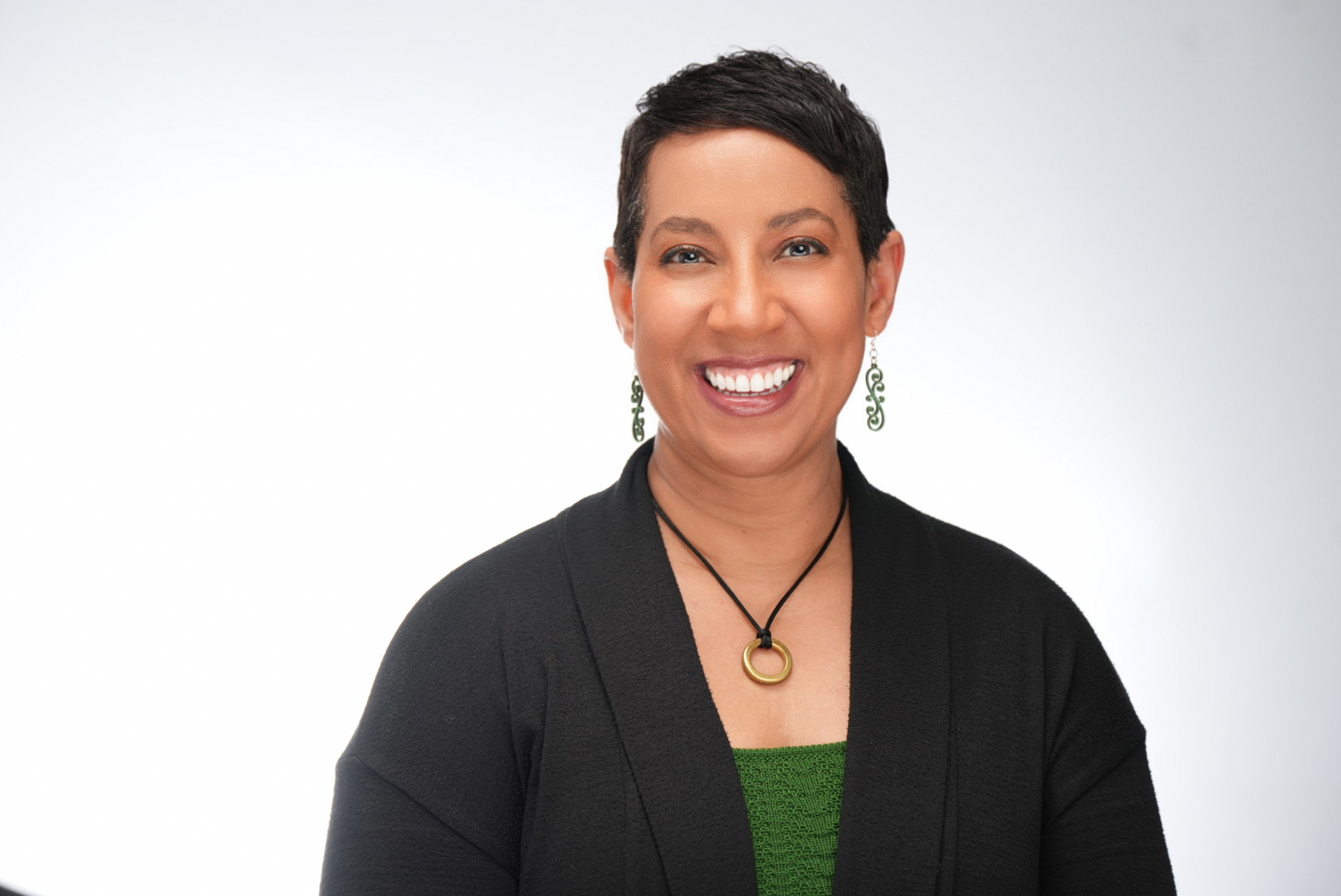
Angela K. Frusciante
Founder and Principal, Knowledge Designs to Change
Principles for Peak Grantmaking
Read more insights related to this Principle:
Learn, Share, Evolve
Related Topics
Diversity, Equity & InclusionRelated Articles
Intentional Relationships Require Courage: Five Undoings for Philanthropy’s New Year
READ
Advancing Equity Through HBCU Leadership
READ
Leading With Love and Finding Joy in 2025
READ