Adaptability Is Not Optional: Leading through the Age of Uncertainty
If the last several years have taught us anything, it’s that we’re not particularly good at knowing what comes next.
Artificial intelligence is reshaping how we work. Organizations are restructuring and reimagining long-held ways of operating. Economic and political conditions continue to shift. Across philanthropy, institutions are reconsidering their strategies, structures, and even their fundamental roles.
Change is the environment
The World Economic Forum estimates that 39 percent of workers’ existing skills will be transformed or outdated by 2030. That’s in three years. Among the skills growing in importance? Resilience. Flexibility. Agility. Curiosity. Learning.
In other words, the capacity to adapt is quickly becoming more important than the expertise we’ve already accumulated. There’s just one problem: we’re human. Our brains are constantly anticipating what’s going to happen next. Predictability gives us an illusory sense of control. Uncertainty gives us stress and anxiety. It’s biological, and this stress changes how we think.
Research from the American Psychological Association shows that stress impairs prefrontal cortex function—the part of our brain involved in planning, evaluation, and emotional regulation. When we’re under pressure, we have less access to our full cognitive toolkit and we find ourselves in familiar patterns and reactive postures.
This creates a consequential paradox. The moments that most demand curiosity, creativity, and adaptability tend to be the moments we have the hardest time accessing them. We can recognize this in ourselves. The unexpected announcement that stops us from really listening; the uncertainties that we fill with rationalizations; the new technology we dismiss before becoming curious about what it might make possible.
For much of our professional lives, we’ve associated competence with knowing: having expertise, anticipating problems, creating plans, providing answers. Those things still matter, but what happens when the environment changes faster than our brains can keep up?
The emerging important competency isn’t becoming better at prognostication; it is becoming better at meeting whatever comes next. Adaptability isn’t about endlessly pivoting without direction. Adaptability is the capacity to stay present and purposeful while circumstances change.
So, how can we begin to build our adaptability muscles? Notice what’s around you. Name what you see and feel. Allow what is so (in other words, stop arguing with reality). Accept what you cannot change. Acknowledge how much agency you truly have. Integrate (a.k.a. act accordingly). A few questions to help you on this journey:
- What helps me stay grounded and curious when I encounter uncertainty?
- Where do I have agency, influence, or an opportunity to respond constructively?
- What might resistance (my own or others’) be trying to help me see, understand, or learn?
- How can I communicate with candor and care when I don’t have all the answers?
- What can I do to improve conditions for colleagues to openly share concerns, disagreements, questions, and new ideas?
These aren’t abstract leadership ideals. They’re practical skills for working in environments where certainty is scarce.
Organizations don’t experience change; people do
We often talk about change as though it happens to an organization. We develop the strategy. Build the implementation plan. Create the communications. Manage resistance. Execute the rollout. Yet it isn’t the organization that is waking up at 3 a.m. from anxiety dreams. We, the people, are.
Recent research underscores the challenge. Only 45 percent of employees reported achieving the change goals established by their organizations. Thirty-nine percent of leaders identified change as a significant source of stress for their teams, while only about one-quarter of employees embraced change at the desired pace without compromising their health.
This points to an important reframing: we don’t need to manage change more effectively; we need to become more skillful at being human inside of change.
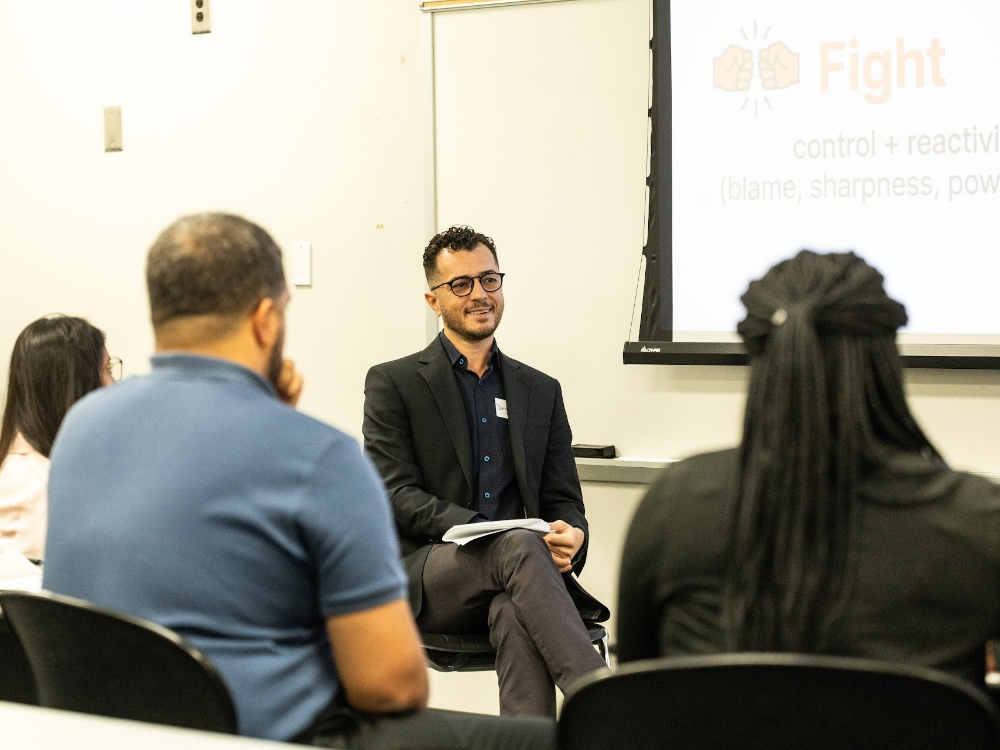
That idea is at the heart of PEAK Grantmaking’s new self-paced Navigating Change course, which I’ve had the pleasure of supporting the wonderful folks at PEAK develop. The course explores the human dynamics of change and practical ways grants professionals can strengthen their agency, adaptability, and capacity to influence what happens next.
None of us knows what philanthropy is going to look like in 2030, let alone Q1 of 2027. No one knows how grantmaking will evolve, or what work will look like when AI agents arrive in full force.
This uncertainty is certainly unsettling. It’s also an invitation to loosen our grip on what we think we know, become more curious, and strengthen our capacity to listen, learn, experiment, and respond. We may not be able to control the waves of change ahead, but we can become much better navigators.
Meet the Author
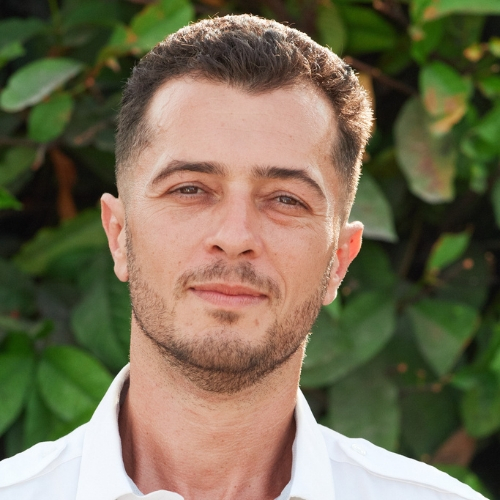
Daniel Weinzveg, M.A.
The Meeting Guru
Principles for Peak Grantmaking
Read more insights related to this Principle:
Learn, Share, Evolve
Related Topics
Organizational LearningRelated Articles
Technology Rooted in Values: PEAK’s Approach to AI Governance
READ
Maintaining the Learning Momentum After a PEAK Convening
READ
How a PEAK–BSU Partnership Helped Me See a Career in Philanthropy
READ