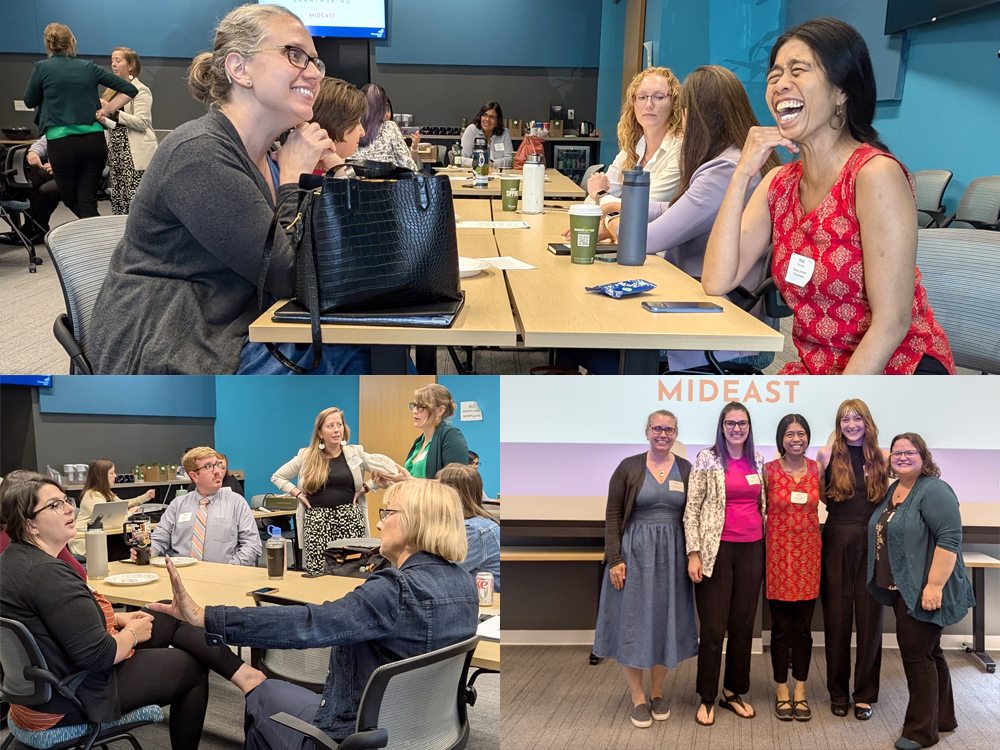
After more than ten years of gathering, the Grants Managers Director Circle (GMDC), a peer network of large foundations, used its Fall 2024 meeting as a moment to reflect on the significant evolution of the role of grants management. While historically viewed as a supportive, administrative function in philanthropic organizations, there was a desire to document concrete changes in grants management structures, roles, and responsibilities in the last decade.
The Center for Effective Philanthropy led a session to support the GMDC’s fall 2024 convening where they compared how the practice and structures of GM groups could look across participating members. The findings shed light on the transformative roles and growing strategic importance of grants management professionals across the sector. Below are some of the key takeaways. We share them in support of all grants professionals stepping into their power as PEAK continues to create innovative opportunities to shape a more equitable and impactful future of grant-making.
Diverse roles and responsibilities
The data highlights that grants management directors wear many hats, with their roles varying significantly across organizations. While some are deeply involved in contracting and overseeing grantmaking budgets, others take active roles in promoting equity-rooted initiatives while others are leading as data and knowledge management efforts. This wide range of competencies not only reflects the adaptability of grants management professionals but it also underscores the need for a more standardized understanding of their core competencies and responsibilities within the philanthropic ecosystem. The most recent release of PEAK’s updated Grants Management Competency Model will be helpful on this front by helping individuals to define the skills and knowledge within their organization as the role of grants professionals continuously shifts to meet the evolving needs of communities and funders.
Navigating career progression
One of the more pressing findings from the analysis is the complex landscape for career progression within grants management. Many GMDC participants cited low turnover—especially among foundation leadership teams—as a barrier to career growth. Others expressed concerns that there is a narrative throughout the sector that grants management roles do not adequately prepare individuals for senior leadership positions despite the reality that GM roles—especially at the largest foundations—are extremely complex and prepare them well for advanced roles. And when professionals hit the glass ceiling, some directors look outside the sector for new roles that will lead to greater career advancement. Despite these challenges, there are emerging opportunities for grants managers to transition into broader operational roles, such as more explicit knowledge and change management roles, suggesting a potential redefinition of career trajectories in this field.
Integrating artificial intelligence
Grants managers have a critical role in the use of technologies and software that support the full grantmaking cycle, and grants managers can leverage their skills and curiosities in tinkering with generative artificial intelligence (AI) to offer strong insights into how this technology can be most effectively used at funding institutions. However, less than half of the surveyed organizations have a formal AI policy, many have experimented with the technology to streamline processes and enhance data management, with future interests geared toward reducing administrative burdens and improving process efficiencies. This points to a growing trend where technology not only supports administrative tasks but also drives efficiency and innovation in grantmaking practices.
Strategic decision makers and change managers
One theme in particular ran through all of the GMDC’s conversations and resonated with members: Regardless of the exact roles and responsibilities of a particular team, there are strategic opportunities to drive operational changes and enhance organizational effectiveness. Whether those opportunities take the form of new analysis, grantee-centered streamlining efforts, technological change, or articulating values and policies, grants management staff are playing crucial roles in an era when philanthropic organizations are constantly challenged to find new ways to learn, share, evolve—and maximize impact.
These takeaways provide critical insights into the evolving role of grants management within philanthropy, and the future holds more opportunities for grants professionals to drive operational change, improve data management and impact tracking, own more grantee and applicant engagement, and deepen relationships between foundations and their stakeholders.
As philanthropy evolves, grants management professionals will continue to be foundational to the operational success of philanthropic organizations given their unique vantage across all areas of grantmaking and investments. As key strategic leaders, they can support foundation leaders and boards in shaping the future of our organizations and our field.
Meet the Author

Daniel Weinzveg
Founder, The Meeting Guru
Principles for Peak Grantmaking
Read more insights related to this Principle:
Learn, Share, Evolve
Related Topics
Career DevelopmentRelated Articles
How Your GMS Can Drive Equitable Grantmaking
READ
Driving Equity Through Technology, Transparency, and Data
READ
Make Technology Transformational, Not Transactional
READ