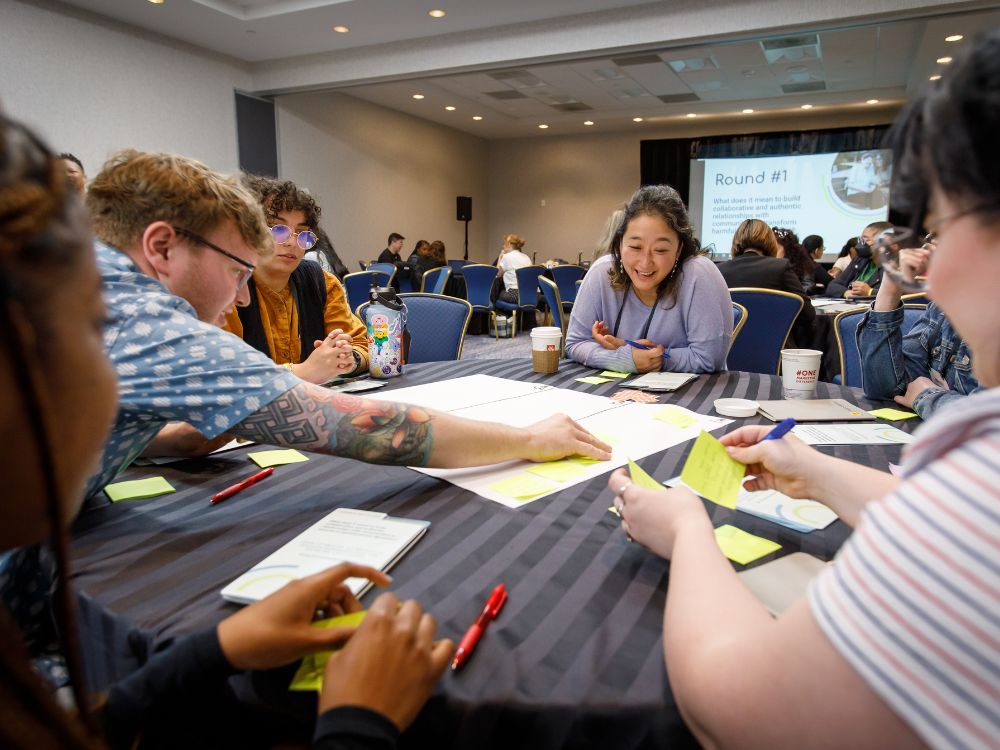
Grants Managers Directors’ Circle Visits Montgomery for a Leadership Learning Journey
Introspection is an often-overlooked—but pivotal—first step in fostering diversity, equity, and inclusion (DEI) efforts—from the individual level to the organization, and beyond. As leaders guiding teams on this path, delving into personal DEI experiences becomes essential. Why? The crux lies in authenticity. Through genuine understanding and embodiment of DEI values, leaders pave the way for a more conscious decision-making process and can nurture cultures of compassion for diverse experiences.
Over the past decade, the Grant Managers Directors’ Circle—one of PEAK’s many peer communities—has gathered twice a year with the aim of exchanging, expanding, creating knowledge, and fostering individual competencies with the goals to address sector-wide issues, promote professional development, and build effective leadership practices. In October 2023, this group convened in Montgomery, Alabama, partnering with TruthRetreats, to embark on an immersive journey of learning and introspection on the very land where generations of Black people experienced unimaginable acts of terrorism.
With a decade of experiences, mutual support, and opportunities to practice new ways of doing and being together in the community, the group was hungry for a deeper, more personal experience to support their efforts to advance diversity, equity and inclusion in the philanthropic sector.
Their days in Montgomery were marked by skill-building sessions around allyship, immersive experiences that included visits to Brian Stevenson’s Equal Justice Initiative museum and memorial, visits to historically significant sites like a Confederate cemetery in Selma, and to grounds where landmark Civil Rights Movement events took place, such as the Edmund Pettus Bridge. Interspersed were enlightening discussions with local leaders and spaces for the GMDC members to share their insights and commitments.
United purpose and vision
James Baldwin made the following observation in a piece he penned for The New York Times in 1962: “Not everything that is faced can be changed, but nothing can be changed until it is faced.” And during this retreat, every moment was a reminder of the national culture and infrastructure that enabled—and still enables—racialized hate and violence to exist. The land, the buildings, and the waterways that surrounded the group on this trip were ripe with America’s history of racial terror. The hotel where we stayed was located next to the Alabama River, and a block away from Commerce Street, where abducted African people who survived the Middle Passage were eventually sold into slavery.
Members of the group come from varied backgrounds, and some had personal connections to the land we were learning about and experiencing. And yet, all found common ground in Alabama, united in purpose and vision. Throughout the experience, painful truths were told. Some left the experience rattled and others empowered, but all were unified in their quest for embodied knowledge and an increased commitment to making changes, both big and small, to become better allies.
Modeling vulnerability and introspection
Through their journey, leaders not only embraced introspection but also epitomized the vulnerability required for honest discourse. Such behaviors are what our sector, organizations, and teams must emulate to heal and chart a course for truth, repair and renewal.
Participants modeled vulnerability by sharing personal stories, which fostered trust among the group. And navigating their respective DEI journeys as part of a larger group helped to hone the nuanced communication skills necessary for compassionate dialogues on sensitive subjects. The hope is that this practice will be carried over to participants’ respective teams and the larger organizations they represent.
The Grant Managers Directors’ Circle has frequently tackled DEI topics—whether it be equity in monitoring and evaluation practices, the intricacies of trust-based philanthropy, narrowing grantor-grantee power disparities, or refining hiring processes. This journey to Alabama resonated profoundly, addressing the foundational “why” behind their endeavors.
As we know, DEI isn’t a static initiative, but an evolving call to action. For leaders, the directive is clear: Share your story, and include the good, the bad and the ugly. Lean into your own vulnerability to activate an awareness of our shared humanity among your colleagues. It’s critically important to stay on the journey. It’s not a one-and-done experience. When leaders genuinely engage in their personal DEI work, they not just effect change—they galvanize it.
For philanthropy to progress, we must disrupt the entrenched patterns perpetuating racist systems. This disruption can also manifest as questions, reflections, standing when asked to sit, leaning in when on the defensive, or simply lending an ear to a colleague. Every day we each are presented with myriad opportunities to alter our individual DEI journey and reshape the larger social fabric in which we are interwoven.
Click here to learn more about how to participate in the Grants Managers Directors’ Circle or any of PEAK’s other peer groups.
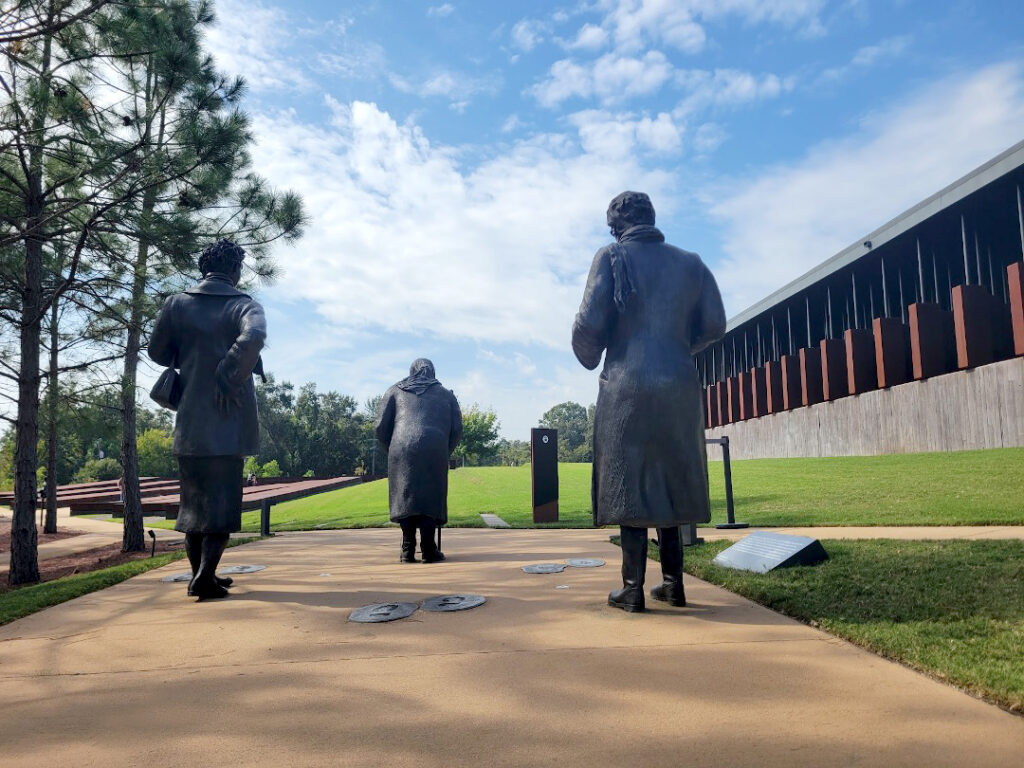
Image: These statues at the National Memorial for Peace and Justice honor the women of the Civil Rights Movement and are among more than 800 powerful sculptures that reflect on our nation’s history of racial terror. Photo by Daniel Weinzveg.
Meet the Author
Daniel Weinzveg
Founder, Weinzveg Consulting
Principles for Peak Grantmaking
Read more insights related to this Principle:
Drive Equity
Related Topics
Diversity, Equity & InclusionRelated Articles
Intentional Relationships Require Courage: Five Undoings for Philanthropy’s New Year
READ
Advancing Equity Through HBCU Leadership
READ
Leading With Love and Finding Joy in 2025
READ