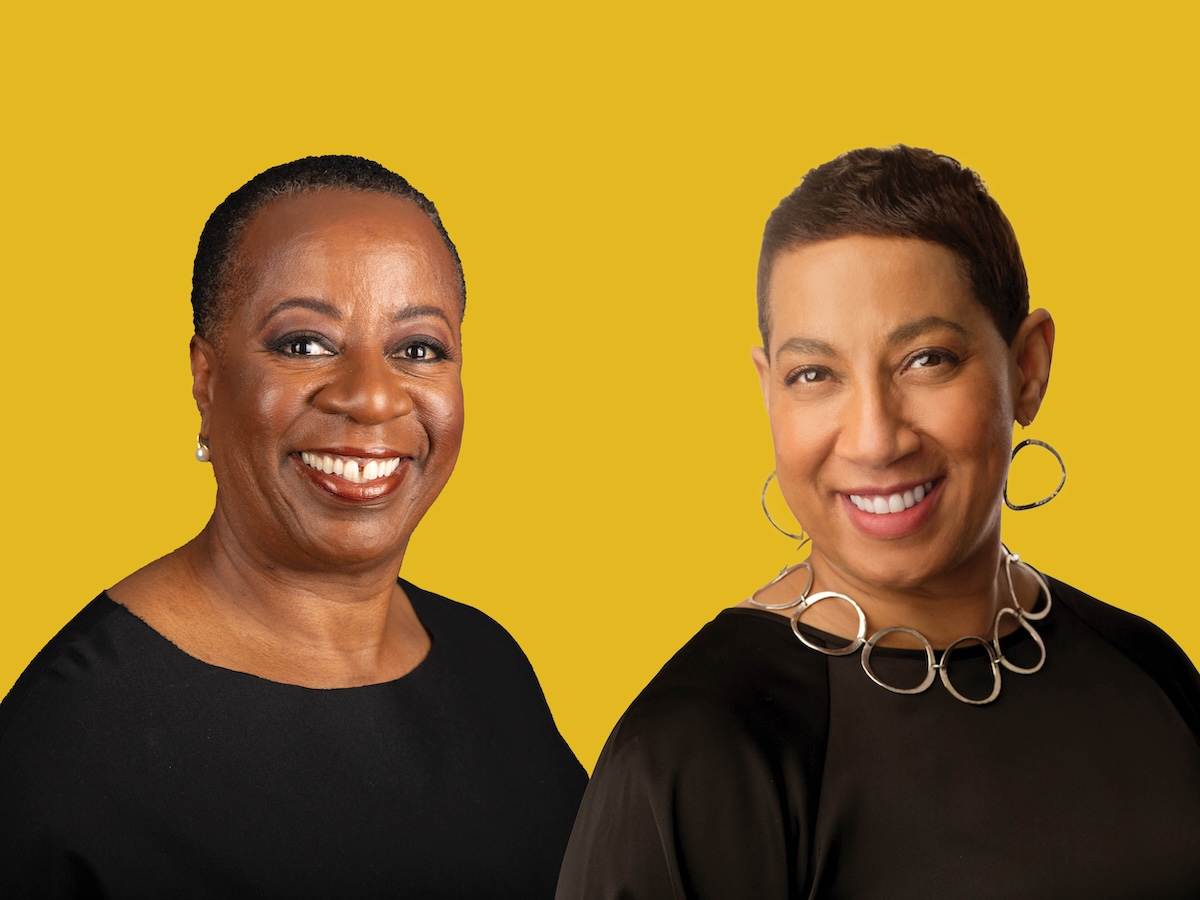
Northern California Grantmakers (NCG) President and CEO Dwayne S. Marsh grew up in communities where investing oneself in social justice work was the norm. “And then I went off to college and found out most people don’t actually do that,” Marsh recently told PEAK President and CEO Satonya Fair. “But I decided I wanted to stay in this work. I knew the impact I could have as an individual in an organized framework to improve society and create the kind of communities that everybody deserves.”
He has since focused his career on advancing racial and economic equity through coalition building in the public, nonprofit, and philanthropic sectors. Before joining NCG—through his roles as codirector of the Government Alliance on Race and Equity (GARE) and vice president of institutional and sectoral change at Race Forward—Marsh grew a network of local, regional, and state entities from a dozen early adopters to more than 200 jurisdictions committed to make policy changes and public investments that advance racial equity.
After earning her doctor of law degree at the University of Cincinnati in the mighty Midwest, Satonya Fair, an emergent learner and deep listener, immediately began to apply those skills to create strategies for transformation. Her decades of leadership within the nonprofit and philanthropic sectors at organizations such as the Executive Leadership Council and the Annie E. Casey Foundation have grounded her in values of equity, inclusivity, and agency, shaping the way she leads the PEAK community of changemakers.
Over the course of their conversation, Fair and Marsh reflected on how to build personal and professional communities in order to move the sector forward, what it means to be a leader in times of extreme uncertainty, and the need to create space for the next wave of sector leaders to innovate and reimagine philanthropy. Edited highlights of their conversation follow.
Fair: I want to begin this conversation with what connects us and hear more about your leadership. How are you leading courageously in this moment?
Marsh: Particularly in this moment, it can feel risky to lean into our values, and doubling down on the values that connect us is putting people up against tremendous headwinds. But as a leader, you have to recognize that risk is a unifier and weigh what it means to be on the right side of your stated values. We have to recognize, from wherever we sit in our organizations, how to mitigate risks and know when to stand up. Philanthropy has the privilege of having a livelihood that can improve lives and shape the direction of society. You can’t do it all, especially right now, but make sure you’re doing enough. Speak truthfully, if not loudly.
When I joined this organization, I had this notion that this would be the decade where philanthropy would show up as incredible institutions that could bridge divides, unleash the potential of communities, and innovate. Five years in, I believe that more than ever. It’s a frightening moment, but it is also an exciting time to establish the value of this peculiar industry.
Fair: It’s like galvanizing steel. To reach that state, the metal has to be able to withstand a lot of pressure and heat over time to get stronger. That’s how I think about sustainable systems change. It’s about the ability to understand that there are going to be forces that change you at the DNA level. But your ability to hold tight to your values is what you invest as capital into the philanthropic sector. It’s important to be steadfast in that work as a human, as a leader, but also as an organization.
Marsh: Society is in a moment where it feels the heat, everything feels like it’s on fire. How we’re going to forge together and what we’re going to forge into is an open question. Part of the challenge is identifying the places where we know we can make a difference. We have to get really strategic about where your lane is and what you lean into.
Fair: Innovation is the ultimate goal for every transition, big and small. But you have to know where you’re going, and that requires strategic thinking. If you don’t have a destination, getting there is virtually impossible. If we don’t know where we’re going, we’ll get stuck in transactions rather than transforming.
I have gotten so much energy from knowing you and being in the same rooms as you, and you have dedicated your career to building networks and coalitions. What’s your playbook for bringing people together—and to bring them together across differences?
Marsh: Philanthropy has to stay connected to community. The power for change lies with the people in communities. Philanthropy must ensure that it doesn’t lose engagement with and representation from those places where we invest. So first, have a shared destination. It takes solidarity and interdependence to change systems and outcomes. The second is mutual accountability. We must understand that we’re doing this work because communities matter and that we need their leadership, agency, and ownership in the work.
But whatever your issue is—environment, youth, health, housing—you can’t get the outcomes you want from your investments unless you confront the inequities in those systems. At NCG, we’ve lost a few members because we consistently lead with equity, but we’ve gained far more who are serious about creating the communities our region deserves.
Fair: At PEAK, we often support organizations as they work to transform operationally and programmatically, but we know that all lasting change starts in the hearts and minds of the people doing the work. So much of the work that PEAK and NCG hold centers on creating reliable and consistent networks where people can have mutual accountability, while also understanding their superpowers and what they bring to the issues.
Why is it so important that philanthropy continues to support individuals within their organizations being part of the NCGs and PEAKs of our world? Why is it important for us to have a network setting?
Marsh: You’ve heard the sayings, “Institutions will eat individuals for breakfast,” and “culture will eat strategy for breakfast”? Aside from everyone eating everyone for breakfast, we have to address this dynamic in both directions. There is a lot of turnover in the sector right now. Working at PTOs—philanthropy transforming organizations—we must understand that transition doesn’t guarantee transformation. Network spaces are the bridge to support individuals as they continue to grow. Peer exchanges and affinity connections become critical as spaces for collective solution-making. None of us have all the answers, but collectively we’re going to be stronger.
Fair: That resonates. Transforming—how to really push people past their comfort zone—is built into many of our missions, visions, and theories of change. We also must remember that people move through systems. And I know I want PEAK to be a part of their story as they move. It was part of mine. It’s why I left the relative comfort of working for places with more resources. I myself have moved through many different fields, and organizations like NCG or PEAK have been adaptive enough and flexible enough to go with me.
At PEAK’s last convening, I talked about the importance of making space for new leaders. We need more people to grasp that they have a role in developing the next generation of leadership for the social sector. Folks like me are going to get the heck out of their way, and I’m encouraging other people to make space, too. What, in your mind, is the secret sauce as we’re thinking about cultivating this next generation of leadership?
Marsh: We have to create environments where those earlier in their career journeys don’t feel isolated. We’ve moved a lot of our programming to cohort-based learning because we find that people are more likely to move to action when they are learning with others and experiencing peer inspiration to innovate. And people who have been at it for 15, 20, 25 years get a little wind in their sails and know that there’s a legacy in their work.
Fair: When we started to think about PEAK’s next chapter in 2020, we began using the West African proverb, “If you want to go fast, go alone. If you want to go far, go together.” What does that look like? So, like you, we have adopted a cohort model where we bring people together—peers, our staff, and our board—knowing that our contributions will have a far-reaching impact, but that we must support what has supported us.
Marsh: When I started at NCG, our tagline was “Together for Good.” Five years in, it remains the essence of what we are all about. There’s so much power in the collective, and what I’ve really enjoyed is how the CEOs at PSOs have stayed connected as well to support each other through this work, through that cycle of experience and exposure. It’s a really powerful blending of the streams of knowledge that can transform organizations.
Fair: I would love to hear your thoughts on why operations professionals and the competency of operations are a beautiful pathway to leadership.
Marsh: One of the reasons I was attracted to PEAK was because they recognized operations as an essential part of the work. They do the infrared work—it’s not at the forefront or easily on the visible spectrum, but it makes a huge difference. It’s the component without which the work cannot move forward.
During my time at NCG, I’ve worked to shift the perceptions of the operations team. First, we needed to recognize that they’re the engine that drives our organization’s success. Second, we had to understand that everything we did had implications for operations, so we had to integrate them earlier in our processes. Third, we had to use that new understanding to create cohesiveness, which I knew would be critical in that evolution, and it has been.
Now that the very viability of the philanthropic and nonprofit sectors is under assault, we need keen strategic and creative thinking on our different mechanisms and structures. This is a time for operations teams to shine, and hopefully the other teams in your own organization are in right relationship with them.
Fair: So, from your team to my team, what’s your advice to individuals who are a part of our organizations for how they can continue this work, hold the flame up, and cast light on the philanthropic sector?
Marsh: I’ll say a couple of things because what I would ask of philanthropy as a sector right now informs the advice I would share with our teams. We need philanthropy to move quickly, steadily, and in solidarity. We need organizations to share their competencies and be open to the expertise of others. We need them to think big and invest at scale. Fund vision, and be responsive, not reactive.
The role of PTOs and PSOs is to enable foundations to realize that vision. My advice to our teams is to continue to do the work to understand our members well. Tell the story of the results we achieve, and what can be unleashed by our members. Sometimes we are moving too fast, and we miss opportunities to tell their stories. And don’t be afraid to make big asks of your peers and members at this time. We need to remind our community that our work holds tremendous value as a lever to unleash what is possible.
And as leaders of people who are experiencing the trauma that’s going on right now, we have to be gracious, understanding, and supportive, but also expect performance. We need each other.
Fair: As an emergent learner, I know I’m not always going to get it right, and that it’s my responsibility to make space for my own growth and evolution as I try to lead.
Marsh: This is not the time to demand perfection. It never is, but right now we’re not even sure what all the right answers are. We know where we want to go and we’re trying to figure out how to get there together. Acknowledging this will unlock a level of humility in leadership and empower your teams to do their best while recognizing that folks are struggling with the reality of society as well. It’s a time for empathy and compassion, but also for drive and focus. It’s a unique combination, but I think we’re capable of it.
Meet the Author

Satonya Fair
President and CEO, PEAK Grantmaking

Dwayne Marsh
Dwayne Marsh, President and CEO, Northern California Grantmakers
Principles for Peak Grantmaking
Read more insights related to this Principle:
Learn, Share, Evolve
Related Topics
CEO:CEORelated Articles
Creating Communities of Care to Uplift People and Their Careers
READ
Leading the Charge for Disability Justice in Philanthropy
READ
The Community-Centered Evolution of United Way Worldwide
READ