Working in philanthropy, the term servant leader is often used when the field refers to community elders and leaders, nonprofit staff, board members, and volunteers. Foundation staff also consider themselves to be servant leaders as well. And for those who have proximity to family, friends, and colleagues who serve or have served in the military of their respective countries, we see the years devoted to that endeavor as the ultimate in servant leadership.
I recently interviewed United Way Worldwide President and CEO Angela Williams for our next edition of the Journal. Williams spent part of her rich and multifaceted career on active duty in the US Air Force Judge Advocate General’s Corps for more than six years, and our conversation eventually led to our shared experiences with the military. My family has a deep history of US military service, my sister served in the Army, and my brother and dad—like Angela’s father—served in the Navy. “I would also say that I have always led a life of service, and it started with my dad being pastor of Royal Baptist Church in Anderson, South Carolina and a chaplain in the Navy,” she shared with me. “I’d go to church, work on base, and be a great volunteer.” For her, it was a foundation for a lifetime dedicated to helping others in a variety of roles across different sectors.
In reflecting on the rich and successful careers Angela and my family members built after their military service, I have to think about those whose lives take different turns. PEAK is fortunate to have a community that stretches across more than 3000 entities within the philanthropic sector. If your work focuses on human rights, economic mobility, skills and technical training, aging, housing, homelessness, health care access, health and wellness, medical technology and research, mental health, well-being, or equity, veterans are a distinct demographic that need to be considered in those funding conversations. When their health and well-being are overlooked for “more urgent” issues, it impacts their lives and the lives of others.
Philanthropy’s values are demonstrated not only by what gets funded, but by the internal culture at each organization. Hiring practices matter. Make the effort to include veterans’ experiences in your work. Our military has long valued innovation and ingenuity—qualities that would be an asset to any foundation and are sorely needed if this sector is going to evolve. Take a more considered look at how their skills translate to your organization—and extend a hand to help them make that leap from military culture to the culture of the private workforce.
While philanthropy sometimes plays a role in filling policy gaps, the sector’s more significant responsibility is raising awareness, funding innovation, bringing community thought leaders together, and opening our aperture as we look across the myriad of issues that the sector confronts daily. Recognize the one day set aside annually to amplify all who have served in the US military and extend that appreciation across the globe.
To Angela, and every veteran, thank you for your service and for being my first example of servant leadership. And as I (and everyone here at PEAK) go into next week, here are a few resources to encourage reflection and a deeper understanding of those who have served our country.
A Case for Patient Philanthropy, Supporting Jobs and Careers for Military-Connected Americans
“Over the past decade, we became aware of a growing civilian/military divide and how it impacts service members and their families as they transition back to civilian life,” Schultz Family Foundation cofounders Sheri and Howard Schultz write in the introduction to this study on the role philanthropy can play in helping veterans transition to the civilian workforce. “We were particularly struck not only by the tremendous sacrifice made by our service women and men, but also by how often that sacrifice and the benefits to the civilian sector are unrecognized by American society. We also learned that the assumptions, stereotypes, and false beliefs about who veterans are and what they offer society represent a missed opportunity for all of us. For these reasons, we decided to act.”
“Tracking the Transition”
In this article from a 2022 edition of h magazine, the Heinz Endowments shares the outcomes of a $2 million investment to study how well government programs help veterans. “Each year, about 200,000 U.S. military members leave the service, according to the U.S. Government Accountability Office,” author Mark Kramer writes. “For many, the unique challenges of transitioning to civilian life can lead to real problems, from being unable to translate military experience into later professional success and adequate income to suffering from emotional or mental health problems as veterans and their families seek out new community, housing and other resources.”
“The Hard Truth About Veteran Funding”
This article from Swords to Ploughshares outlines the shortcomings of current approaches to supporting veterans at the federal level and also in the world of philanthropy. “Relying on a tiny minority of foundations that list veterans amid their program areas is troublesome given the trickled-down support given to veterans in recent years, yet many funders fail to recognize veterans in funding portfolios dedicated to populations and issue areas that include veterans. Foundations that fund education, aging populations, women, LGBTQ+, healthcare, and criminal justice for example, do not explicitly recognize or distribute grants for veteran projects.”
Face the Fight Coalition
Humana Foundation is a founding partner in this USAA-led initiative to bring businesses and organizations together to fight veteran suicide. “The point of the coalition is really that we can all raise awareness together,” Humana Foundation CEO Tiffany Benjamin told Chief Healthcare Executive in July. “And so one of the really big components of this is just talking about it, and saying, ‘This is preventable.’ We have to have this conversation, we have to acknowledge that our veterans are important to us, and that they deserve access to support and care to address their mental health challenges, and frankly, just to talk about the fact that this is happening, and that we can prevent it.”
The Veterans History Project
“The Veterans History Project at the Library of Congress collects, preserves and makes accessible the firsthand recollections of U.S. military veterans who served from World War I through more recent conflicts and peacekeeping missions, so that future generations may hear directly from veterans and better understand what they saw, did and felt during their service.” Explore the project’s extensive online collections of audio, video, and print materials that document veteran experiences and learn how you can contribute by recording a vet’s oral history or collecting materials to donate to the library.
Do you have additional resources you’d like to share? Send them to Publications Editor Jesse Rhodes at jesse@peakgrantmaking.org to be considered for inclusion in a future edition of Weekly Reads.
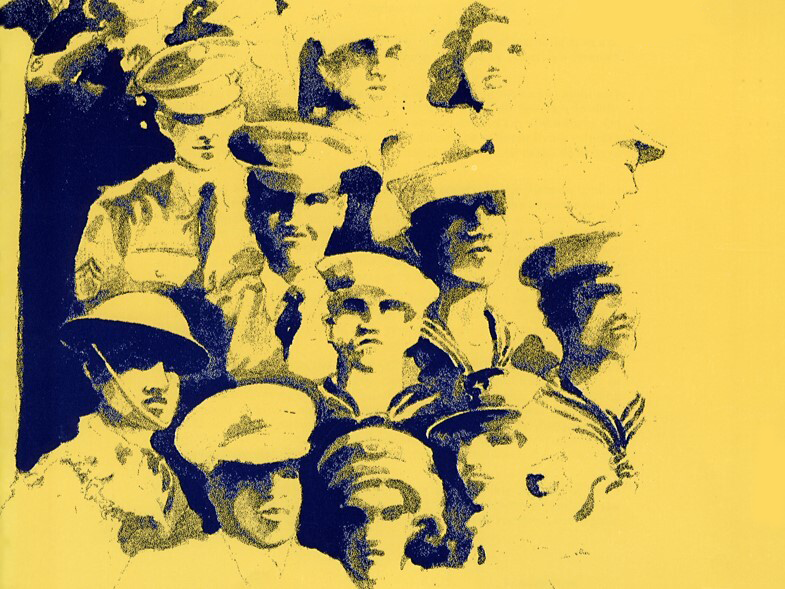
Image: Detail from a 1983 Veterans Day poster, courtesy of the US Department of Veteran Affairs
Meet the Author

Satonya Fair
President and CEO, PEAK Grantmaking
Principles for Peak Grantmaking
Read more insights related to this Principle:
Drive Equity
Related Topics
Diversity, Equity & InclusionRelated Articles
Intentional Relationships Require Courage: Five Undoings for Philanthropy’s New Year
READ
Advancing Equity Through HBCU Leadership
READ
Leading With Love and Finding Joy in 2025
READ