PEAK Delaware Valley Digs Into Relationship Building With De’Amon Harges
PEAK’s Delaware Valley chapter recently hosted philanthropy trailblazer De’Amon Harges for a session where he spoke about why it is important to listen to each other, why it is imperative that we actively and meaningfully involve community residents and organizations in our grantmaking, and how we develop authentic relationships and partnerships with communities as philanthropists. In this Q&A conducted via email, interim chapter cochairs—NBME (National Board of Medical Examiners) Philanthropy Director Allison Acevedo and PA Humanities Council Senior Program Officer Jen Danifo—share the key ideas from the session that they hope will help you to take new approaches to engaging with your grant partners.
Why did you approach Harges to speak to the Delaware Valley chapter?
Acevedo: De’Amon has a wide and varied lens on Philanthropy. He has been an active community and philanthropy leader through his work with The Learning Tree, as chairperson of Grassroots Grantmakers and other organizations in the philanthropy and nonprofit sectors. De’Amon can speak the language of diverse community members and philanthropy in a way that identifies and solves challenges in a very collaborative way.
Danifo: It was really Allison’s genius. She brought it up, and I immediately supported the idea. PA Humanities has been working with De’Amon for a number of years. He was integral in helping us think more deeply about how we connect with and build relationships with programming partners and grantees. In 2018–19, our staff worked closely with De’Amon and his staff from The Learning Tree to go through an organizational learning journey. The purpose of this journey—which included staff, board members, and on-the-ground community partners from the Harrisburg, PA, area—was to break down barriers between funder and grantee and just really see each other as humans. It sounds easy and simple, but often we put up professional barriers and don’t have the authentic conversations needed to understand how we can more effectively work together. During this journey, we talked about equity, centering community assets and expertise and making space for emergent conversations about the work—not just reserving learning for “reporting time.” De’Amon and his facilitation partner, Seana Murphy, provided the space for us to think through these issues. We came out of that process feeling more connected to the “why” of our work and we integrated some of the relationship-building tools into our grantmaking and other programming.
How might a person’s professional identity conflict with their individual identity in ways that can impact community relationships?
Acevedo: De’Amon addressed this in his conversation with our group. Sometimes we show up in our professional role and become defined by our professional title. We are then viewed by that title regardless of where we are and who we connect with. Sometimes titles and roles create inequity because people equate titles, roles, and certain professions with power and authority. De’Amon says we have to take time to show up and communicate as humans regardless of title, regardless of profession and simply get to know each other. Once we talk and know each other as people, relationships can develop and flourish. This is why I like De’Amon’s idea of having a party where people from different professions show up and don’t talk about work, as a way of starting relationships in communities.
Danifo: We wear professionalism as armor and sometimes shield folks from getting to know our true selves. Often we lead with what the organization wants, yet we want those we fund or collaborate with to lay themselves bare to prove they are “authentic” enough for investment and partnership. De’Amon invites funders to break through that, to show ourselves and connect our work to our personal whys, to be vulnerable. One way we’ve tried to incorporate relationship-building and connection is holding space for kick-off parties where grantees can celebrate their accomplishments and we can articulate our goals, hopes and personal “whys” for whatever we are collaborating on. We also incorporated music to kick off some of our meetings. We have a few grantee-sourced music playlists we use. Never underestimate the power of a good playlist!
How can you get senior leaders and board members comfortable with the idea that focusing on community building in these ways is a meaningful and valuable use of time?
Danifo: Leadership is complex and comes with an overwhelming sense of responsibility. We’re so worried about compliance and following the rules. I’m not saying this is the wrong way to approach the work, but in order to get board and staff comfortable, we should be talking about the concerns and unpacking worst-case scenarios. What is a worst-case scenario? What risks are we willing to take on? If we do our due diligence, can we move in ways that are more relationship-based?
The more the board and staff see the human side of the work and spend time with our grantees and partners, the more they will see why this side of the work is nonnegotiable. For example, PA Humanities is hosting a learning journey with De’Amon this fall at the National Humanities Conference in Indianapolis. We’re pairing session participants with local residents to explore the neighborhood together, creating space for deep listening and sharing. Our intent is to break down professional walls between grantee and institution—and cultivate community, kindness, and joy
Acevedo: We have to get leadership to understand that community building is critical because it expands perspectives about our work. If we only focus on engaging with some parts of our geographic community, we will not be able to fully engage to solve challenges our society faces. We will be leaving out people as we attempt to address critical issues faced by residents of the areas we serve. As philanthropists, we need to actively listen to, hear from and support decision making by people who live in areas we seek to engage, collaborate with and fund. This work will inform our perspective and decisions as grantmakers and as philanthropic organizations.
Explain the concept of asset-based work and how looking at your relationships through that lens can help your grantmaking.
Acevedo: Simply, we need to know what assets exist and get to know people and groups doing critical work in any community we seek to partner with in our philanthropic efforts. If we do not know assets as communities have named them, we will be working blindly to pursue grantmaking, giving, and capacity building, or to solve social problems.
Danifo: Asset-based work asks us to shift from a deficit mindset and lead with possibility. It asks: how do we collectively celebrate and leverage the skills and strengths of the people doing the work? Sometimes in philanthropy, we see communities and people as problems to be solved. This is not to say there aren’t real challenges in our communities. It’s just a shift in focus to building on strengths. In our latest grant round, we included questions about the skills and assets of organizations, their staff, and the communities they work with. We also ask grantees how they’ll use assets to move their work forward. We’re also asking what they want to learn and how learning will help to strengthen the work they are doing currently. These are small shifts we’re trying to make to center and build on community assets.
What excites you the most about the approach to grantmaking that Harges shared with you?
Acevedo: First, as De’Amon emphasizes, philanthropy is more than grantmaking. It excites me to say philanthropy is about establishing partnerships to advance transformation. Philanthropy is not defined by transactional grantmaking. Philanthropy includes grants, but it’s also about relationship building, capacity building and community building. His approach stresses partnership among all community contributors rather than philanthropic organizations as decision makers about what is best for communities.
Danifo: A few things: Lead with relationships, not systems or processes. It just makes sense. People make the work happen! Constantly work at shedding the professional armor we wear. This has let us be more creative in how we design programs, gatherings, and meetings. Prioritize learning conversations over reporting and compliance. Oh, the things we’ve learned by approaching our work in this way!
PEAK chapters offer members opportunities throughout the year to gather, share knowledge, strengthen practices, develop skills to meet career goals, and advance the profession—all while enjoying each other’s company. Click here to find your regional chapter and look for upcoming peer learning events.
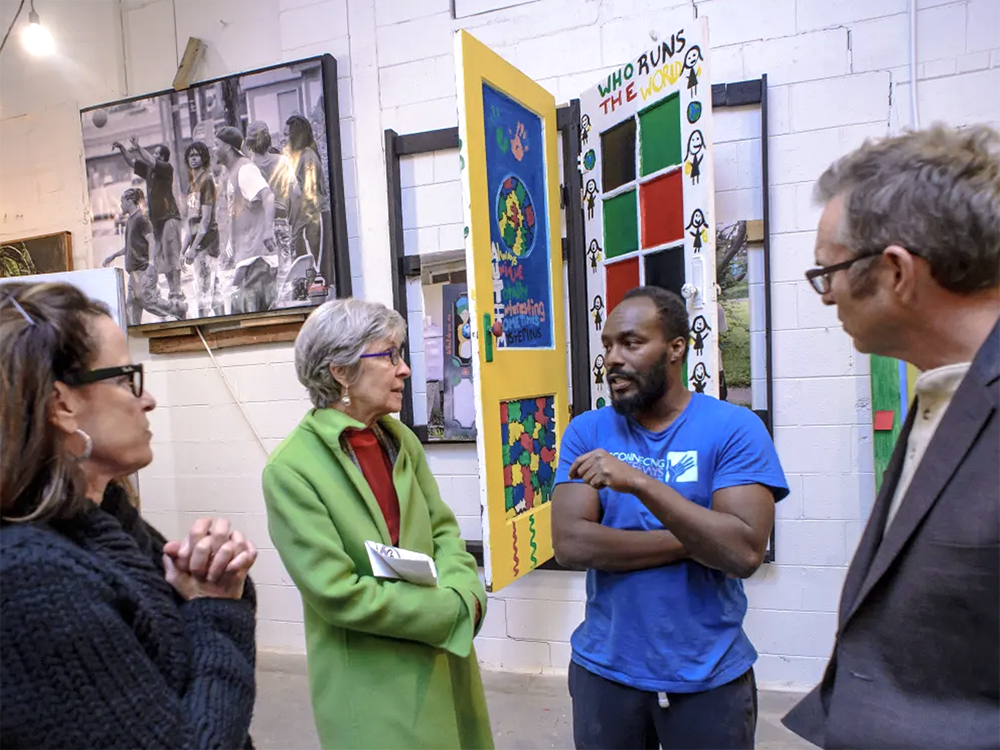
Image: De’Amon Harges (second from right) at the opening of the art exhibit Perception: What’s Behind the Door.
Photo by Wyldstyle Photography, used courtesy of The Learning Tree
Meet the Author
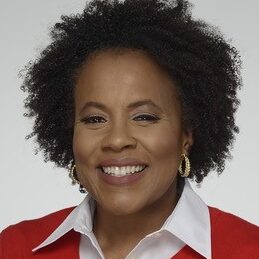
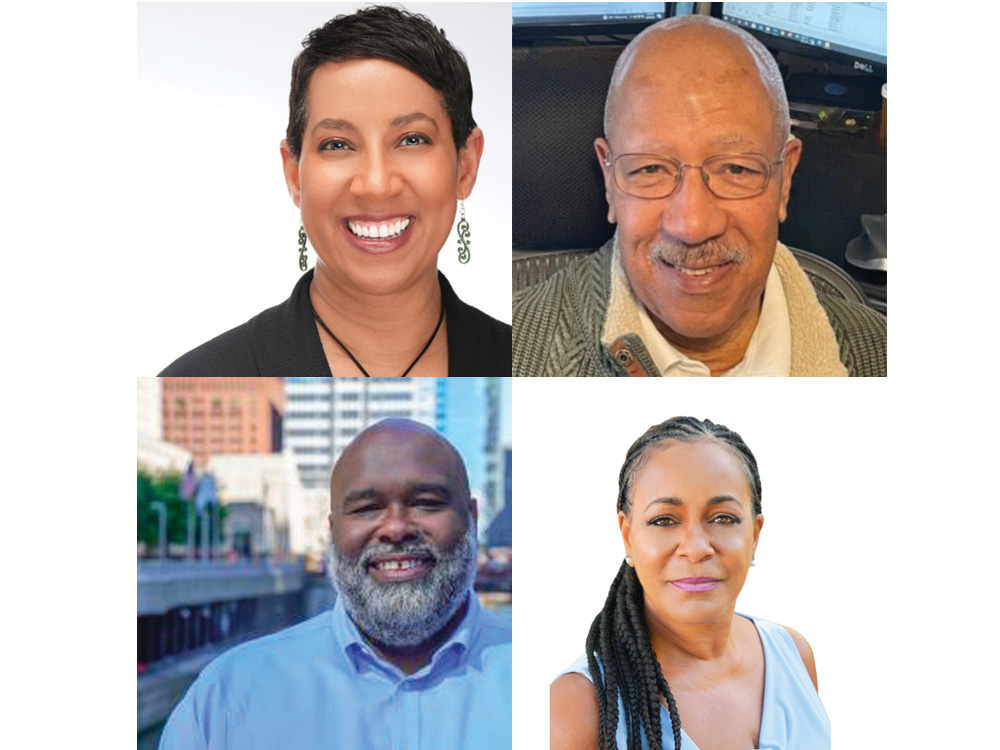
Allison Acevedo
Philanthropy Director, NBME

Jen Danifo
Senior Program Officer, PA Humanities Council
Principles for Peak Grantmaking
Read more insights related to this Principle:
Narrow the Power Gap
Related Topics
Diversity, Equity & InclusionRelated Articles
Intentional Relationships Require Courage: Five Undoings for Philanthropy’s New Year
READ
Advancing Equity Through HBCU Leadership
READ
Leading With Love and Finding Joy in 2025
READ