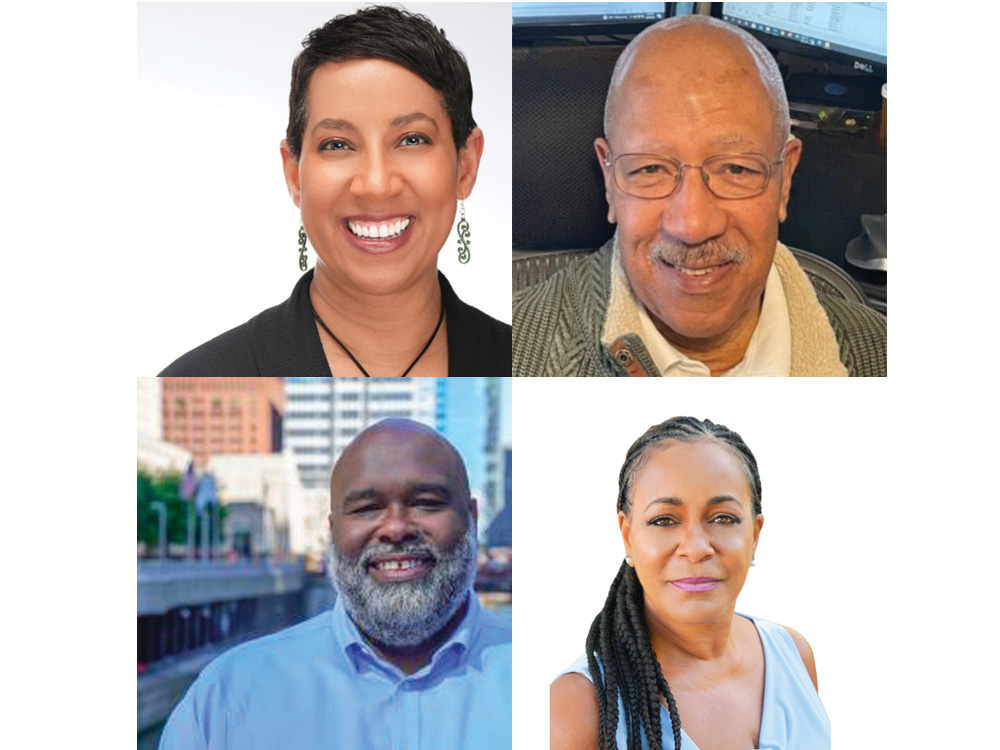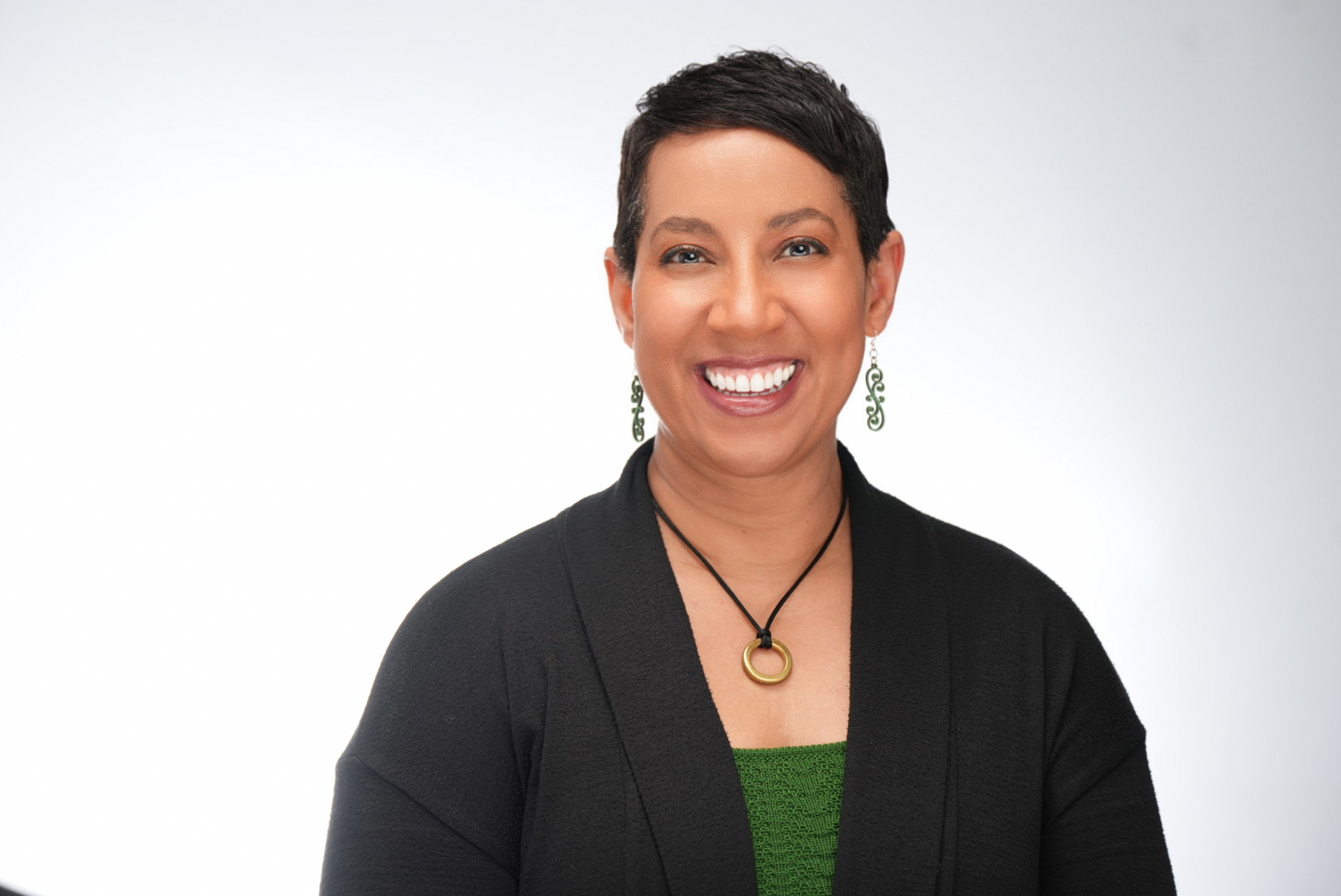
At PEAK’s Volunteer Leadership Summit in September, Tanisha Davis, PEAK board member and vice president of grant operations at the Archstone Foundation, joined Dr. Sybil Jordan Hampton, a renowned leader in higher education, philanthropy, and civil rights, for a galvanizing discussion on the fortifying power of ordinary acts of courage, and her lifelong work to reshape the world into a kinder and more equitable place.
Hampton’s commitment to social justice began as a high school student in Little Rock, Arkansas during the Jim Crow era. Following the Brown v. Board of Education decision, she was a member of the second group of Black students to integrate Little Rock Central High School. After earning her doctorate degree from Columbia University and working in higher education for decades, she served as president of the Winthrop Rockefeller Foundation (WRF), where the grantmaking focused on increasing quality early childhood education and care in public school settings; economic, racial and social justice projects; and economic development.
Highlights from their conversation follow below.
Davis: Can you speak to lessons from your career and life journey?
Hampton: It takes courage and grit to embark upon the work to achieve economic, racial and social justice. Courage is not something that can be acquired easily. Courage is something you gain as you live your life by taking risks, falling down, and then getting up over and over again. This work, the journey of being a change agent, that you are embarked upon requires you to know that you are going to fail and you’re going to be buked and scorned, but you will need to have a very clear focus in your own mind and heart about what needs to be done or changed, and what is possible.
Most of you have no idea what happened in Little Rock after the high schools in Little Rock reopened in 1959 because it wasn’t dramatic. No troops came back. We were not on the evening news. It was very quiet. But that doesn’t mean that desegregating Little Rock Central High School got easier. I was an ordinary, lovely young girl who had an opportunity to do something extraordinary. This is why it’s important to not think of those who work successfully for change or for good solely as heroes and icons. This work has to be done by armies of ordinary people who summon up the courage to do extraordinary things.
Davis: What led you to philanthropy and your social justice work? Could you speak to your first position in philanthropy as a grants manager in the education and culture space?
Hampton: As I began my career and wondered what would make a difference in society for me as an African-American woman, I recognized one place where change was leveraged that many people didn’t know or think about, and that was in philanthropic organizations. So, my desire was to work in a philanthropic organization. Every door that has opened to me opened because my skills and education prepared me. I also networked. I had relationships with people not because of what I thought they could do for me, but because we shared values and a vision about what this society could and should be.
When one of my colleagues at the GTE Corporate Foundation left, I was one of eight people that she recommended to be interviewed as her replacement. I was selected. This gave me the stellar opportunity to become Contributions Manager-Education and Culture at a major corporate foundation. It was unnerving because on the floor where I worked, I was the only person who was brown. But the president of the foundation tutored, coached and mentored me because she believed that I would one day be a foundation CEO, and that was deeply significant for me.
Davis: And you did become one! You worked to give other people—including me—opportunities. However, many people go into philanthropy as a means of gaining power. How do we work around that?
Hampton: There are so many people who start kissing rings when they meet people who work in foundations. As a leader, I describe myself not as a warrior, not as an icon, but as a foot soldier. For those of us who are involved in this work, don’t let people seduce us because they want to be in what they think is the inner sanctum of people who move in the circles of power.
We have to remain ordinary people who do extraordinary things because that’s how change takes place. At my first position in higher education, people said to me, “You’re too talented to be working with kids who don’t meet the traditional admissions criteria to this college.” I thought, who better to work with young people who could move to the center but are not ready than someone who is very talented? One needs to be humble, but one also needs to have expertise, and expertise takes time.
Davis: Where do you see opportunities for having a greater impact in creating more equitable and just grantmaking programs?
Hampton: The most important work is building infrastructure, and it is in small undertakings that you build infrastructure and enlarge your stakeholder group. Look for areas where you have the expertise, energy, and networks to drill down and produce the kind of work that is going to make a difference. The amount of money that has gone into the Arkansas and Mississippi Delta from philanthropic organizations is staggering, yet the amount of change is so small because people don’t work together. Instead of foundations taking on different parts of the problems in an area and working as colleagues to address the whole, single organizations try to take on all of the problems.
Philanthropy has to be held accountable for the state of the lives of people who are just hanging on by their fingernails. Philanthropy has to take some responsibility for the fact that young people don’t have hope. We are not and cannot be responsible for the entire mess, but we have opportunities to keep hope alive for people by working smart.
It’s also crucial for us to build and enhance the capacity of people who want to do good in their communities before we start distributing large amounts of money that can’t address problems because nonprofit and community leaders are stretched too thin. We need to be able to say to a person or organization, we believe in you, and that belief is to strengthen you so that you can make a difference in your community in perpetuity. It takes courage to make strategic assessments of capacity and decide how you’re going to address them so that you build quality in organizations that deserve to do better.
Davis: What advice would you give to grants management professionals in philanthropy?
Hampton: Any organization that you hope will enable you to work for change and equity has to be an organization that you believe in writ large. You have to feel comfortable wholeheartedly embracing all the work of the organization. You cannot be an effective change agent if you are not trusted or respected and if your voice is not heard.
I’ve always cautioned that those of us engaged in this work will only be able to do some small part of building the infrastructure that is needed over the next 5 million years in order to achieve equity. Our focus has to be on having influence in the organizations we work at. If the organizations are hesitant or don’t have the courage to do this work as emphatically as it could and should be done, then you have to respect where the organization is, and you have to work in a way where people lean into you and can take some baby steps toward being more fully engaged.
There is no way that you can demand and there’s no way that you can get anxious or disconsolate so that your colleagues are made uncomfortable. You need their hearts to open. As I look back on the civil rights struggle and the laws that made it possible for me to go to Little Rock Central High School, I know I did not have a rich and rewarding experience because laws don’t change people’s hearts. And at the end of the day, that which makes it possible for people to live in peace and respect all people has as much to do with laws as with what happens in your head and community—but the center of it is in the heart.
Davis: At PEAK2023, we had a discussion about whether it’s enough to have a seat at the table. What are your thoughts on that?
Hampton: You can’t leap to the table—you can only be invited to the table, and being invited means that those who convene the table understand the value you bring. You don’t have to be at the table, but you have to be sure that you are in relation with people at the table until you can get there. If you don’t get there, your ideas get there and your values and vision begin to touch and shape those conversations like water falling on a rock makes an impact over time.
If you are a person on the quest for equity and economic, racial and social justice, you have to work to get other people in your organization to buy into your visions and goals. Our roles are to impart knowledge that helps others in the organization assume responsibility for this work. If we believe that the only people who can do the work are us and people who are like us, then we will not be successful.
As a civil rights era person, I have always valued building a beloved community. I am constantly looking for people who share or who can share the value and vision of equity because it’s more than just people who look like me. There are a lot of ways in which people are at the margins, and we need to come together across these fault lines to make a world where every child can achieve a personal best in their lifetime. We need to understand that it’s going to take people joining together, being patient and forgiving each other.
When Winthrop Rockefeller engaged in philanthropic work prior to his death, he said, it’s not enough to feed everybody on the line who’s hungry: the work is to understand and resolve what creates that hunger and eliminate that situation or modify that system. There are all kinds of tables, and the most important tables are ones where people make the rules, regulations, policies, and procedures that create and perpetuate systems. We have to understand that systems are at the root of the issues that we are dealing with. If many more people who value what we value can work at the highest levels of the various systems, then change will take place.

Meet the Author
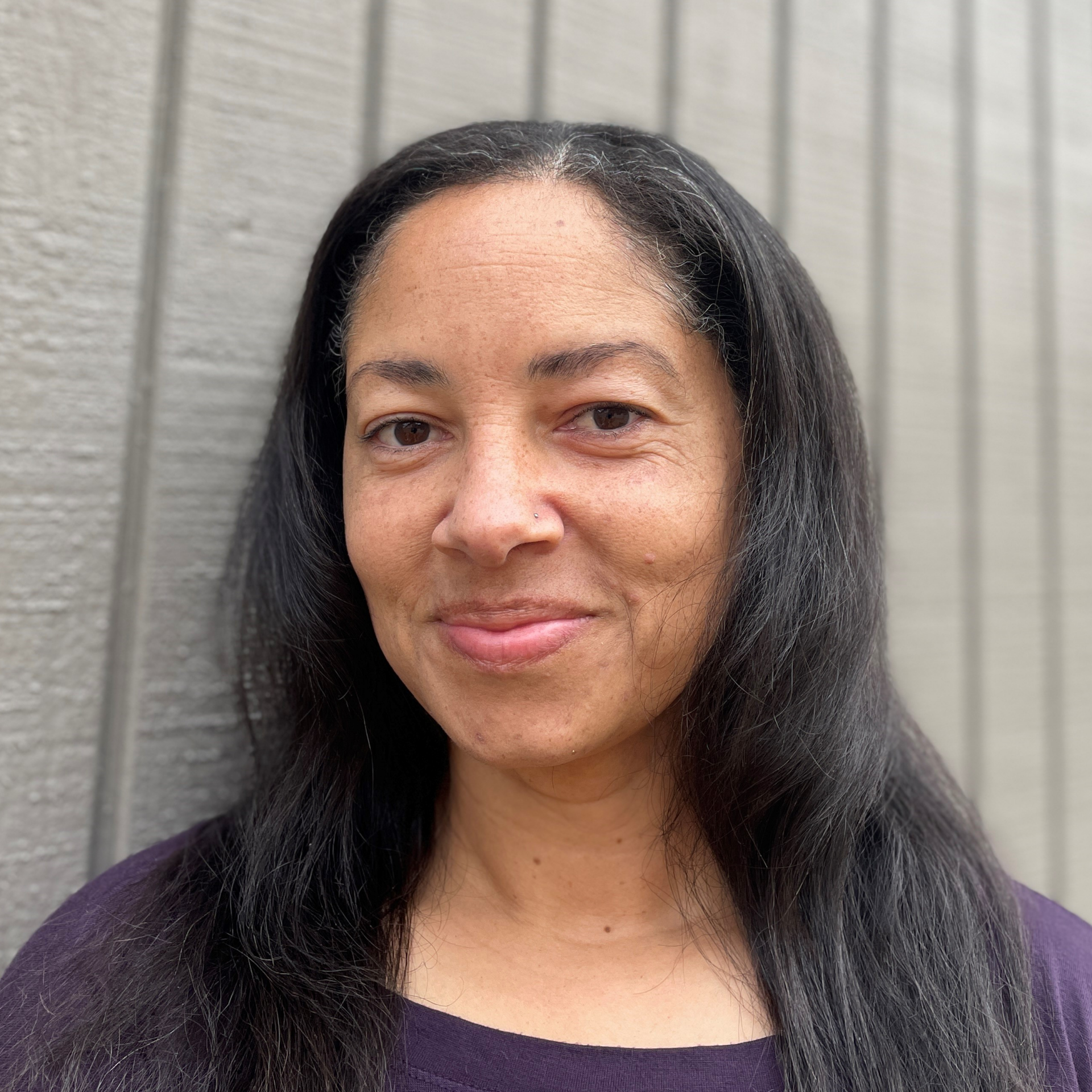
Tanisha Davis
Vice President of Grant Operations, Archstone Foundation

Dr. Sybil Jordan Hampton
Civil rights leader and former President, Winthrop Rockefeller Foundation
Principles for Peak Grantmaking
Read more insights related to this Principle:
Drive Equity
Related Topics
Diversity, Equity & InclusionRelated Articles
Intentional Relationships Require Courage: Five Undoings for Philanthropy’s New Year
READ
Advancing Equity Through HBCU Leadership
READ
Leading With Love and Finding Joy in 2025
READ