The Community-Centered Evolution of United Way Worldwide
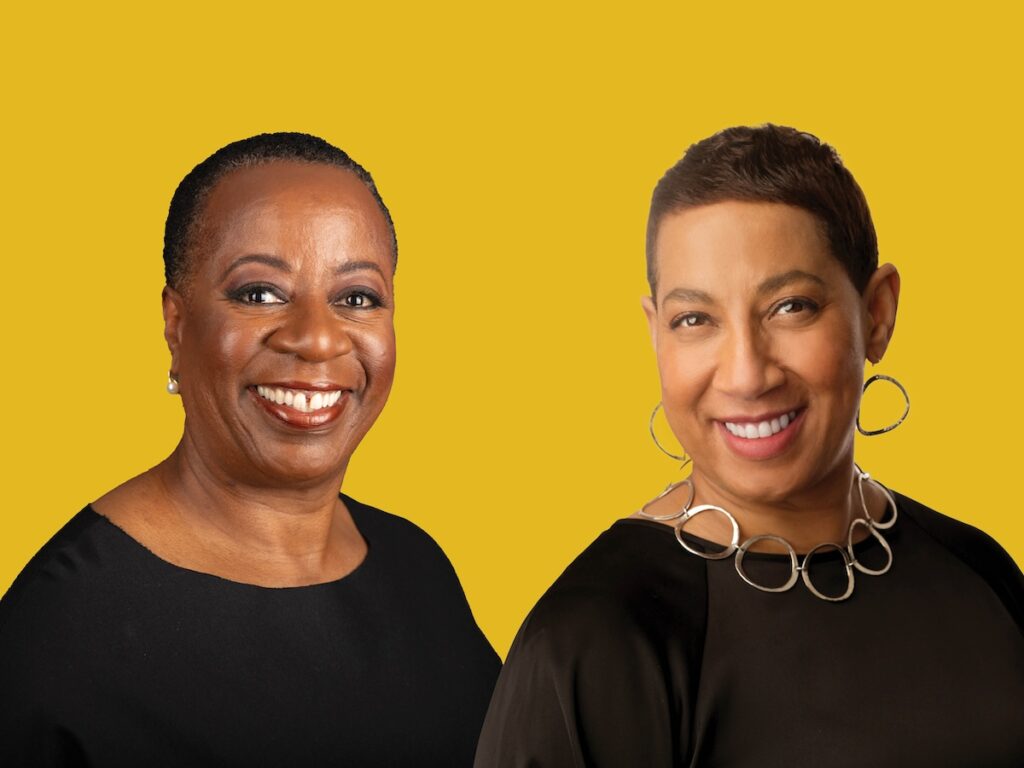
When Angela Williams stepped into the role of CEO of United Way Worldwide in 2021, the organization had been facing considerable headwinds that were challenging its ability to generate revenue as well as its status as a trusted intermediary between donors and communities in need. Under her tenure, the organization is taking a new approach to both listening to and learning from communities in order to inform United Way’s next chapter.
In this conversation between Williams and PEAK President and CEO Satonya Fair, the two leaders explore the ways in which an equity-centered and community-focused approach to giving is necessary to move the field of philanthropy forward.
Fair: You have come through so many sectors and you have a wealth of experience. How has the knowledge you gained through those different disciplines impacted your approach to working at United Way Worldwide?
Williams: My approach to work has always been to go deep where I’m planted, learn the lessons well, become a subject matter expert in something that allows me to be a contributor, and then build upon those lessons for the next opportunity. I would also say that I have always led a life of service, and it started with my dad being pastor of Royal Baptist Church in Anderson, South Carolina and a chaplain in the Navy. I’d go to church, work on base, and be a great volunteer.
But the notion of being more than a volunteer in the nonprofit sector came when Hurricane Katrina happened. I had recently left as the chief compliance and ethics officer for Sears Holdings in Chicago when President Bush and President Clinton formed a foundation. They both asked me to join the staff as the interfaith liaison. I was responsible for dispersing approximately $27 million to rebuild houses of worship that were affected by Katrina.
Upon completion of my foundation work, I began to explore a range of opportunities, including compliance-focused work with Goldman Sachs; working in government as the chief of staff for [US Secretary of Education] Arne Duncan; then moving on to the role of general counsel of the YMCA of the USA. Throughout my career, my decisions are always weighted against what I really want out of this life and how I can best contribute as a servant leader.
Fair: When I think about my role in pushing for social change and justice, I think, I’m supposed to be doing what I’m doing right now because of my belief that God puts me where I’m supposed to be. Now here I am, in year three of my tenure at PEAK. You’re in your second year as CEO, but early on, you went on a listening tour of affiliates. What did you learn from those conversations that helped you consider ways to deepen and broaden United Way’s overall impact?
Williams: First, to respond to what you just shared: When I think about what led me to my current position, I would say that it’s because I was, and am, in an Esther moment. There’s a story in the Old Testament where Queen Esther’s uncle Mordecai says to her that, “Who would know but for such a time as this, you were in the position as queen to save your people?” And when I look at what’s going on in the world right now, I see parallels. I see how leading an organization such as United Way allows me to support the overall and varied needs of communities all over the world.
To return to your question: In my first 100 days, I initiated a listening tour, because as a new leader, it’s important to hear colleagues’ perspectives about what’s working and what’s not working. I wanted to know what their hopes and dreams are for the organization. Out of those conversations, three themes emerged.
The first was the need to refresh our brand while introducing the public to what United Way does. We all agreed on the need to engage younger generations with our work through volunteerism, employment, and donor engagement.
The second area of network focus is revenue diversification due to a significant decline in employee giving campaigns. The scope and focus of philanthropy is evolving across the sector, resulting in positive and negative changes in corporate and individual donations. The third was to make sure that we are impactful, relevant, and sustainable.
Fair: PEAK is also focusing on moving folks from being volunteers to being leaders. I volunteered to help with PEAK’s annual conference back in 2012, became a board member in 2016, and now I’m the president and CEO. I also believe that the individuals in our network have agency, especially to advance equity. With that in mind, I want to hear more about how you are centering United Way’s work around equity. How are you adapting to ensure that United Way can continue to thrive with this very specific focus on equity behind the work?
Williams: Prior to my arrival at United Way Worldwide, some great work had already started around equity. The murder of George Floyd triggered a national reaction, including that of our United Way Worldwide board of directors. They took action by creating an equity statement challenging our local United Ways to embrace equity. The goal was to introduce training around equity and to use an equity lens to look at the impact that we’re having in communities. What I bring to the conversation is the lived experience of being in work environments where I may be the only, or one of a few, Black women. Across my career, I’ve had experiences where I had to stand up for myself, to say that I should be given the chance to be promoted, to do the work, to be recognized. To step into an organization that took equity seriously and had already activated its network was an incredible opportunity.
And I modeled behavior by hiring one of the most diverse executive leadership teams in the sector. This is something I’m really proud of. It’s disappointing and unfortunate that many leadership opportunities are not benefiting from the diversity of certain individual work and life experiences. Leadership at all levels, including the board of directors, should reflect the level of priority around diversity. When absent, it raises the question of whether there really is a will to lean into equity and make it a reality.
One example of how United Way is doing that work on the ground involves the Hayti community in Raleigh Durham, which is receiving funding to address the Black Wall Street travesty in Raleigh. When the city council decided to build a highway through Black Wall Street, it completely decimated generational wealth creation for African Americans because it displaced so many Black professionals. The children of those business owners are still alive and still grieve the loss of what their families had.
Our local United Way office has been facilitating racial reckoning conversations with the stakeholders. We are a part of finding meaningful ways to support the survivors, to seek ways to recognize what happened, and to create pathways for future generations to prosper and build wealth. As a community convener, United Way invites marginalized and underrepresented people to have a voice in creating solutions for things that have happened to them and to shape the future for themselves and their family members.
Fair: That’s the power of taking full advantage of community agency and the community’s preexisting relationship with United Way’s presence. It also reminds us that there is a history of policy decisions that purposefully disrupt our ability to be connected to each other.
It is important for us to make sure this country, and hopefully the philanthropic sector, is moving toward justice. I tell folks, “If you’re a nonprofit that’s not doing some level of policy advocacy, you’re getting it wrong.” I know it’s scary—but certain policies have hurt a lot of people and need to be undone. It is beautiful to hear how you are creating that new pathway for the survivors. Reparations scare so many people, but the descendants are here, the survivors are here, and we can do better by them. But it starts first with a conversation.
And United Way has a unique vantage point. You are an intermediary. You are all over the world.
I want to pivot to discuss ways funders can better center nonprofits not just as grantees, but as partners in the work. Organizations like PEAK and United Way have experience and expertise. We can do things on the ground that a funder cannot. How would you advise the funding community to embrace nonprofits as partners?
Williams: First, I’m going to start by going back to the Hayti example. United Way Raleigh was able to elevate the voices of the community and empower them to take ownership of what the Black community needs and wants.
Second, Mackenzie Scott—in her giving and in her thoughtful responses every time she published about her next round of giving—essentially says that nonprofit leaders know what their communities need, they know how to spend funds, and that she trusts these leaders will do the right thing to serve the community.
The third point I’ll make is that, when we use the term nonprofit, it doesn’t mean no profit. It’s a gross injustice for corporate partners, foundations, or governments to believe that problems in society can be solved on the backs of nonprofits with little-to-no operating funds. That makes no sense. We see, over and over again, how communities need the services of nonprofits to fill gaps that the government or corporations, through their foundations, can’t fill. In order to ensure resilient and thriving communities, all of the sectors must come together, but not at the expense of undercutting or underfunding nonprofits.
Fair: They forget that the people doing the work—sometimes in dangerous environments—are not compensated the way they could and should be, considering how tough the job is. It’s also interesting how, when nonprofits are financially solid, there are funding organizations that say, “You don’t need us.” These nonprofits are trying to do the things that the funder said are valuable. But these organizations also have to plan into the future, deliver on a vision, have the right people in the right roles, and make sure that they are safe and cared for. That requires funding and support. It seems to be a failure of vision on the part of philanthropy to only want to fund in such narrow ways. Scarcity as practice is a mindset that must be unlearned.
With the world shifting so fast, what things are you learning, and what are you trying to unlearn as a leader?
Williams: I’m learning the importance of listening and engaging people where they are. For example, I came to support our Maui United Way and the recovery efforts around the Lahaina wildfires. The CEO of our Maui affiliate said, “Angela, you have to be invited here and you have to make sure that you’re coming in not as a savior, but to understand the importance of equity on this island.” Everything they do is about honoring the Indigenous populations of the island, making sure that when philanthropists give money, that the money is equitably distributed. What’s extremely critical in this reconstruction moment is making sure that the native Hawaiians have a seat at the table and a say in how their ancestral lands are redeveloped, how they will be compensated, and how to ensure that offshore corporations don’t take over the land and displace the population.
Fair: If we’re going to be part of reconstructing communities, let us go about it with humility and grace using an equity lens. And let us not repeat those practices that harmed communities. If the sector is going to evolve, each individual must play a role. And you, through your work, are achieving that through the volunteer community of experts and practitioners that you have cultivated—and it is a beautiful thing to observe. Like you, I value PEAK’s volunteers, who will be the leaders in this sector tomorrow. I am so encouraged and excited that you are in this role. You are servant leadership in action and you are an example for us all. With love, take your flowers.
Meet the Author

Angela Williams
CEO, United Way Worldwide

Satonya Fair
President and CEO, PEAK Grantmaking
Principles for Peak Grantmaking
Read more insights related to this Principle:
Learn, Share, Evolve
Related Topics
CEO:CEOOrganizational Learning
Related Articles
Forging Empathy With Determination to Create a New Sector
READ
Creating Communities of Care to Uplift People and Their Careers
READ
Leading the Charge for Disability Justice in Philanthropy
READ


